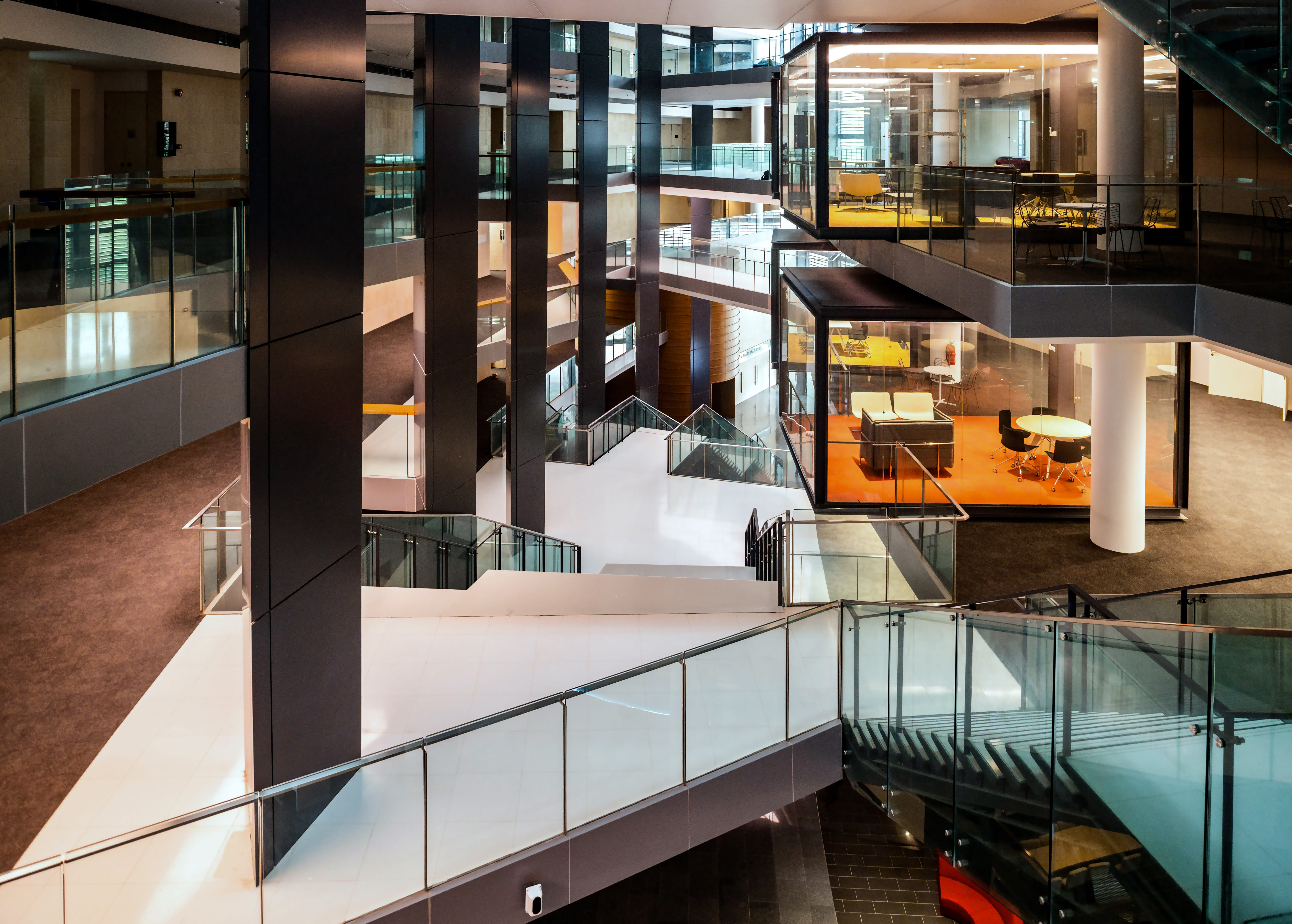
Every new year promises new interior design opportunities that push you to plan smarter, create with the planet’s future in mind, and maximize the space available to you.
Let’s explore four of the most meaningful trends that are shaping the world of interiors right now: flexible spaces, sustainability, and embodied carbon calculation.
Flexible Spaces That Shape-Shift With You
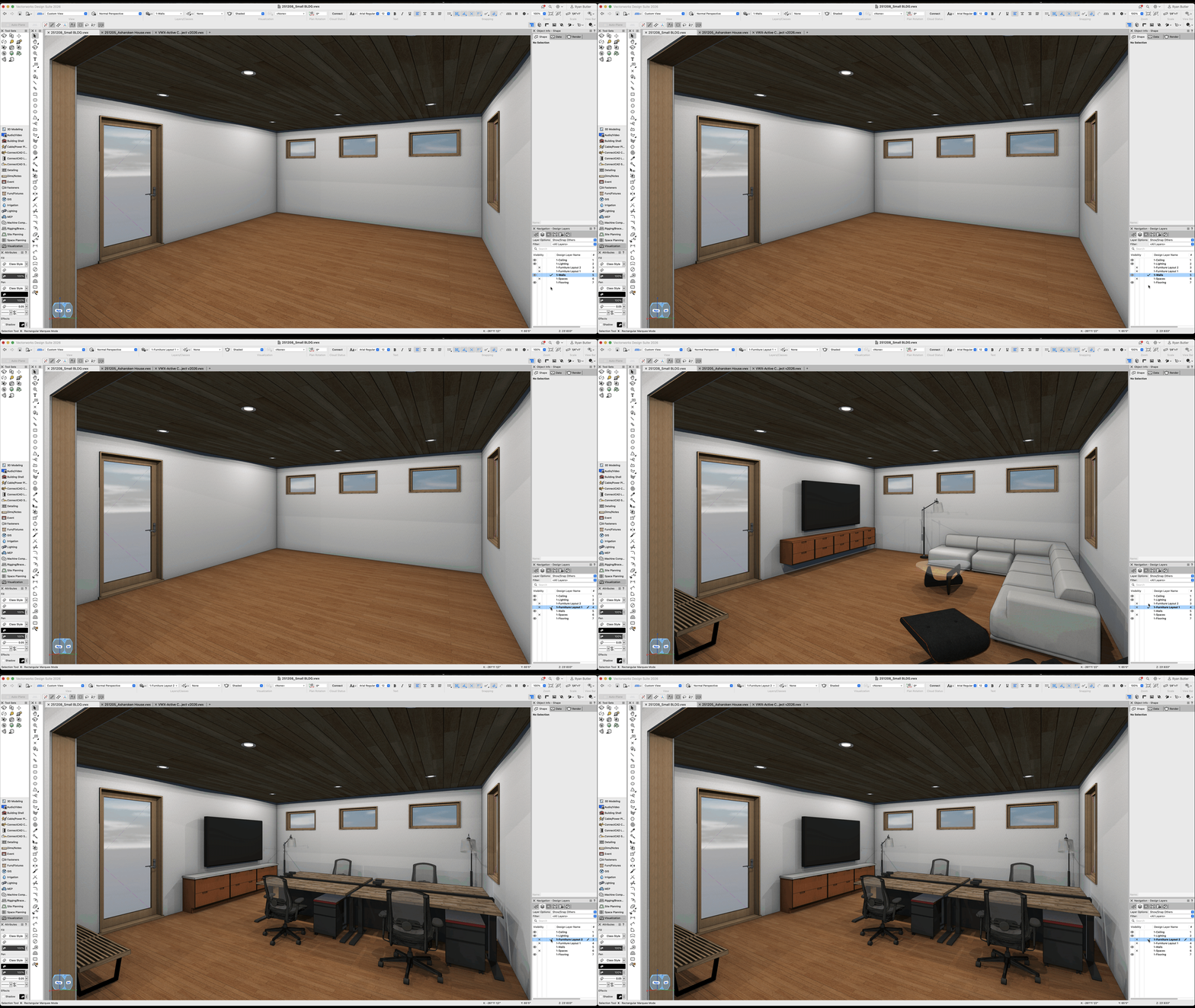
Flexibility isn’t just a perk; these days, it’s a design necessity.
Post-pandemic shifts have changed the way we view both commercial and residential spaces. Shrinking office footprints, for example, may push you to adapt layouts for multiple uses. A space you design to be a meeting room in the morning needs to work as a lounge by lunch time and be an area for creative conversation by the afternoon.
In residential projects, you’re likely to be asked to design living rooms that transform into home offices or a basement that doubles as both an entertainment area and a home gym.
To craft such flexible spaces, you can prioritize modular furniture, movable partitions, and clever storage solutions to keep your options open. With each project, you have the opportunity to rework what home and office life mean, and embracing flexible arrangements means your designs can grow and evolve as you do.
Sustainability as a Design Standard
Clients are likely to expect more sustainable solutions, and even if they don't, their jurisdiction will likely require them to do so.
Whether you’re pursuing environmentally conscious designs based on a client’s request or for environmental certification, you may be asked to consider a building’s operations, its energy use, and sustainable materials.
It’s not just about how “green” your design is on day one. You also need to consider how spaces will perform long-term by tracking operational efficiency, maintenance, and the ability to adapt to future needs. For example, François Lévy Architecture + Interiors PLLC considered “both current needs and how the building could be re-imagined to meet future needs,” when crafting an environmentally resilient design for St. John’s Episcopal Church (pictured below).
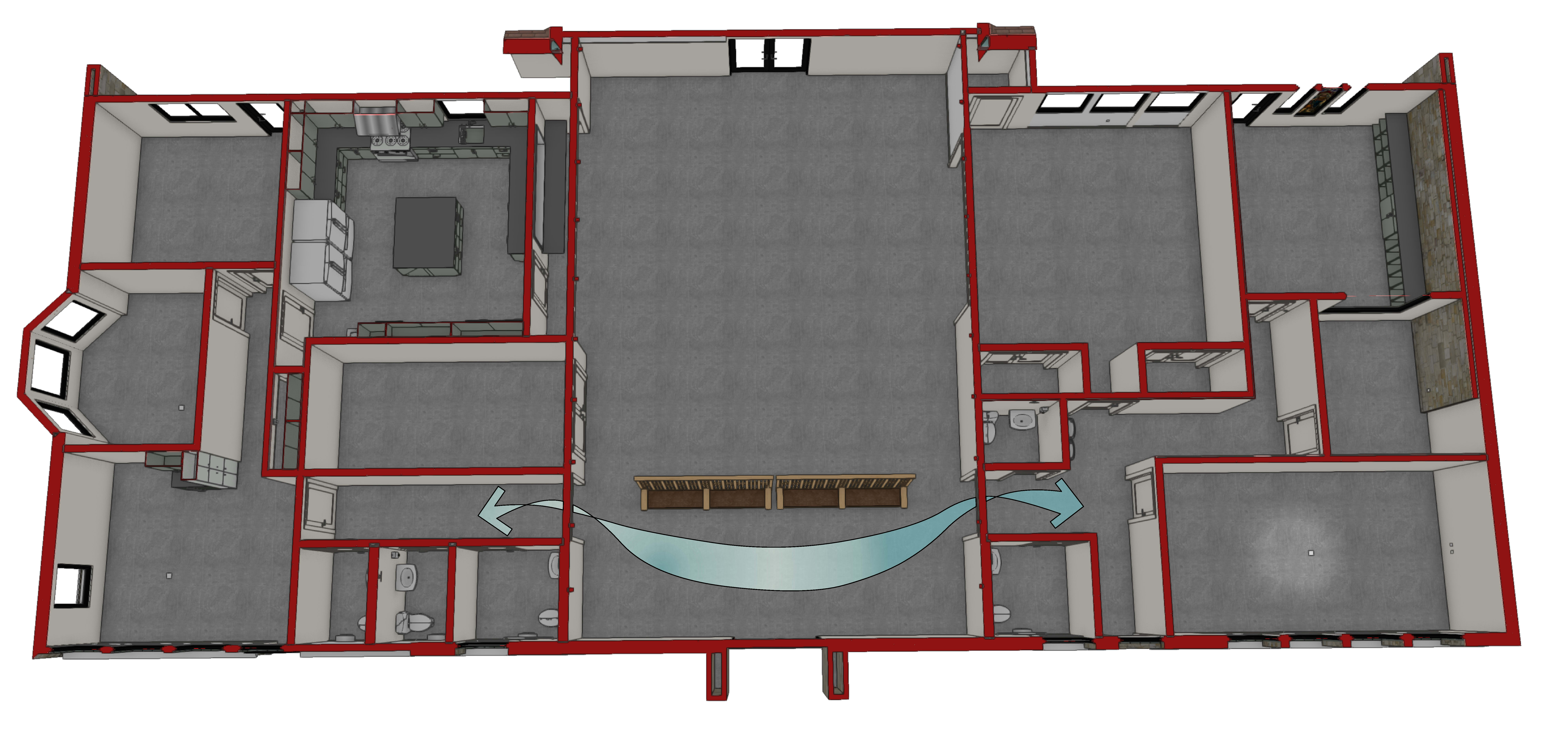
Image courtesy of François Lévy Architecture + Interiors PLLC
In this year and beyond, you’ll see designers framing sustainability as a holistic approach: making every choice, from air quality to biodiversity, part of a story about growth and lasting value. If you’re looking at a project’s future, you’re looking at how sustainability can stay integral, well beyond the initial design.
Embodied Carbon Calculation in Interiors
You can further your sustainability efforts with embodied carbon calculation, as well. Your designs’ finishes, furniture, and equipment (often called FF&E) can make a big impact on a project’s total carbon profile, and tools like Vectorworks Architect’s Sustainability Dashboard give you live feedback on your project’s environmental performance.
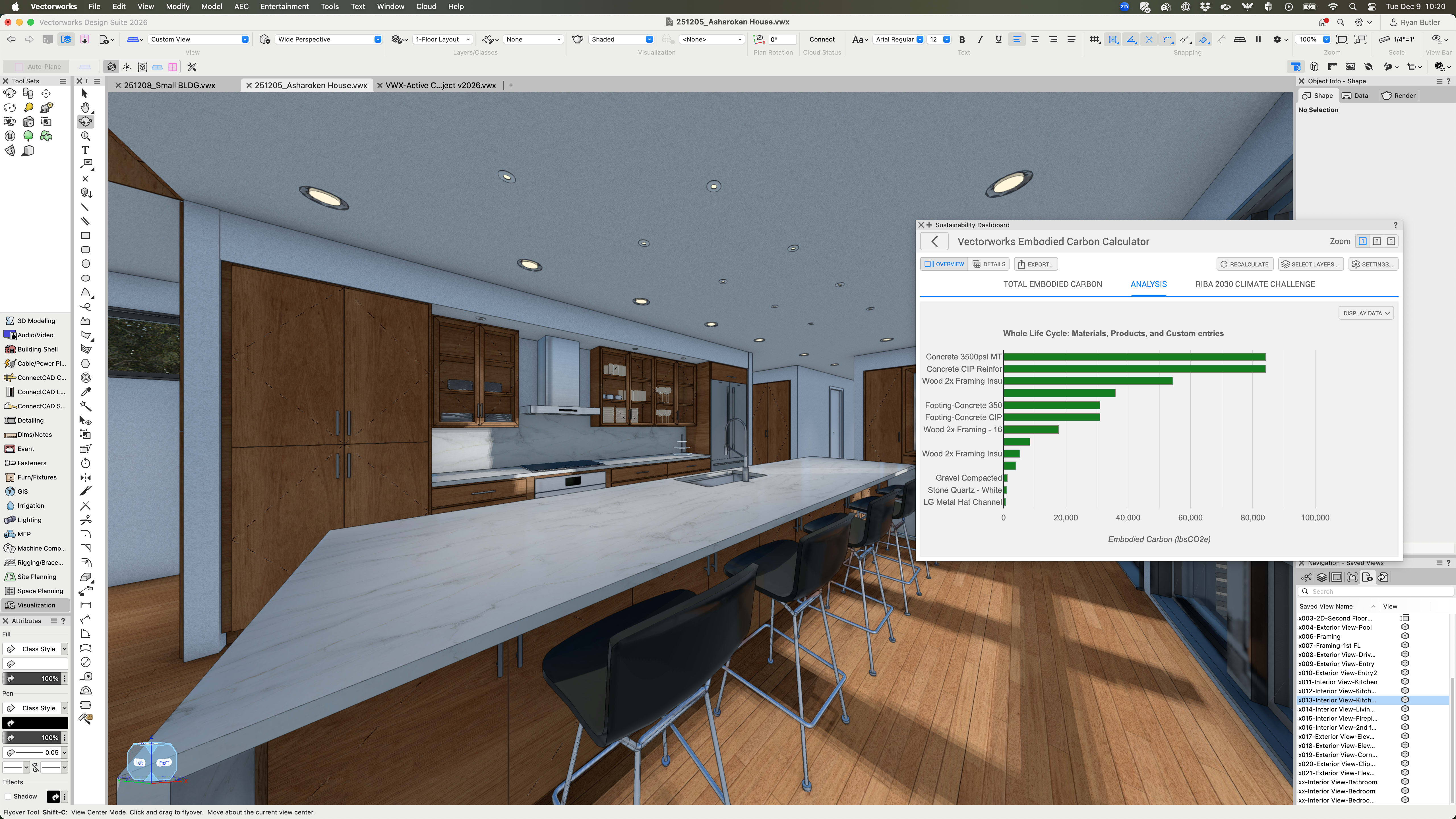
The dashboard automatically compiles data directly from your design model, tracking embodied carbon and letting you make informed choices before you ever sign off on a fixture or sofa. Accounting for the full lifecycle of everything in a space — from production and delivery to eventual reuse or recycling — means you’re part of a shift toward transparent, responsible design.
Bringing the Outdoors into Everyday Spaces
Last, but not least, there’s biophilic design. This philosophy is about blurring the line between indoors and outdoors so the spaces you create feel more closely connected to nature. Rather than treating plants or natural finishes as an afterthought, this trend encourages you to think about daylight, greenery, views, and natural materials as core building blocks of your interiors.
The impact reaches far beyond aesthetics. Biophilic interiors can reduce stress and improve mood, which is why the approach is gaining traction in workplaces, schools, hospitality, and healthcare environments alike.

Image courtesy of i29.
DRIVE YOUR OWN CREATIVE VISIONS FORWARD
Begin to explore interior design trends with a free trial of Vectorworks Architect.
Featured image courtesy of GDP Architects DN BHD and Adaptus Design System SDN BHD.
Stay in the know with the latest insights
Subscribers receive news, customer stories, success and learning tips, event information, and other important announcements from Vectorworks.
By submitting this form, you agree that Vectorworks, Inc. and its authorized partners may contact you in regards to news, offers, and the use of our software, services, and platforms. Learn more about our privacy practices and your data on our privacy page.*