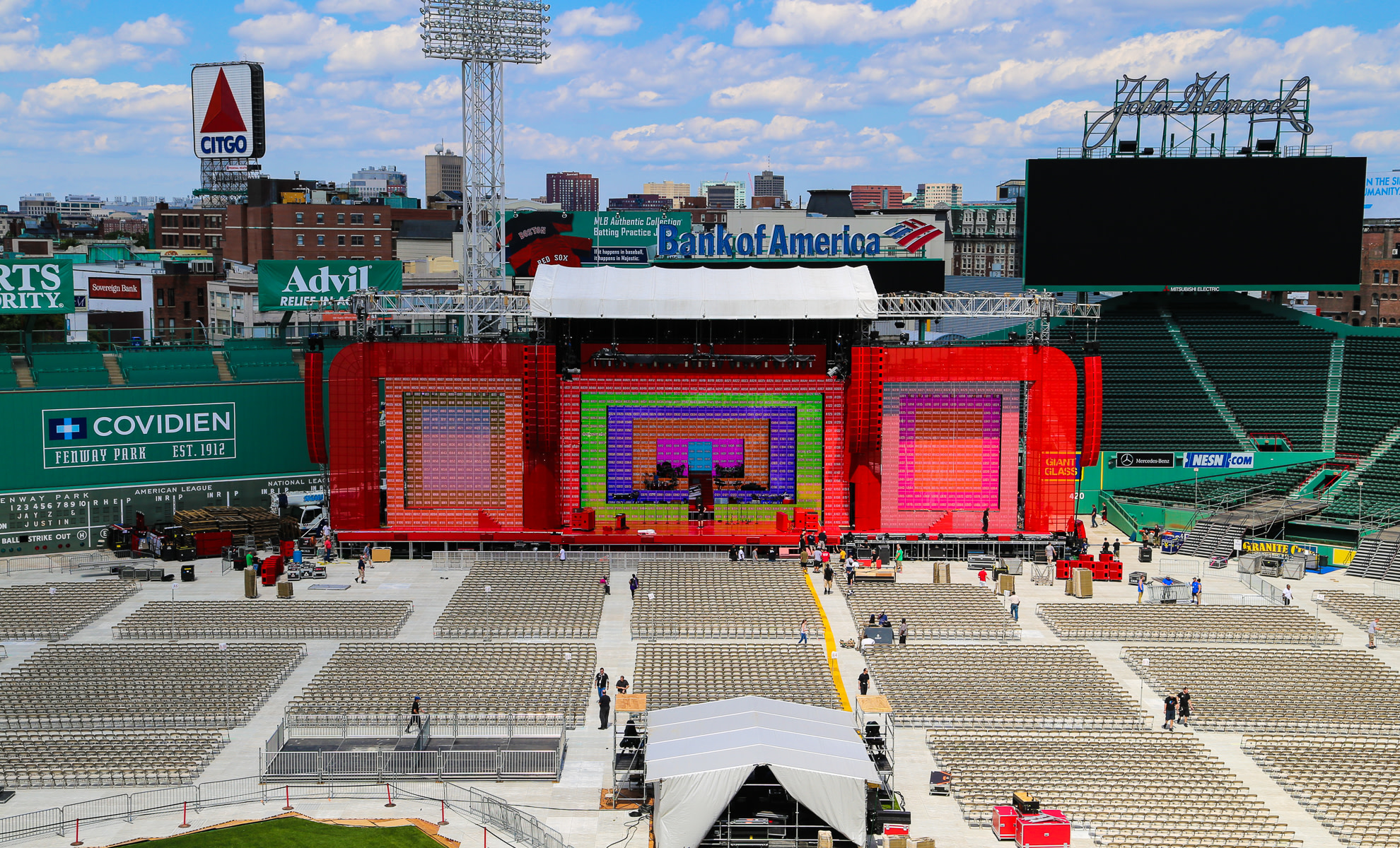
In 2026, you’re stepping into a design world defined by innovation and the ever-present demand for productivity, creativity, and audience engagement.
The landscape of entertainment design is electric with possibilities, constantly evolving to deliver deeper connections and memorable experiences. So, what are the trends shaping entertainment design this year and in the years to come?
Sustainable Design Choices and Processes
With more venues and communities expecting sustainable events, companies are pursuing climate-conscious initiatives, like carbon offsets. This reflects a growing collective awareness about the environment, as is evident in efforts such as planting a tree for every ticket sold or aligning with local environmental organizations.
Processes like truck packing and other logistics methods can be assessed in the same way architects and site designers use Vectorworks’ Embodied Carbon Calculator (VECC). This helps you pinpoint where adjustments can reduce your carbon footprint and makes sustainable decision-making easier.
Energy-efficient lighting, especially LEDs, continues to be a popular upgrade. In fact, 64% of design professionals surveyed in a Vectorworks study said clients are actively asking for energy-efficient lighting.
Bold LED Walls and Immersive Designs
Building on this shift toward efficient lighting, LED walls have become a cornerstone in creating immersive and interactive event environments. These walls captivate audiences with vivid visuals and dynamic storytelling, setting a high standard for your project’s aesthetics.
Curved, modular LED walls add a whole new dimension, giving you opportunities to design flexible spaces that can change with your event’s story, whether it’s a live performance at a music venue or an experiential exhibit. These technologies move beyond mere backdrop to interactive elements that engage and connect audiences, transforming venues into living experiences.

PUBG | Image courtesy of Live Legends
If you’re wanting to experiment with LED walls of your own, Vectorworks Spotlight’s LED Wall tool is a great place to start. The tool lets you draw either straight or complex curved walls so you can harness one of the most important and growing trends in the industry. You can also build detailed walls, switch between different panel types, and generate reports on size, pixel resolution, power, and data requirements with just a few clicks.
LED video walls are just one way of crafting immersive projects. Unique experiences that make your audience feel absorbed in your work can also include video projection, interactive scenery, and other narrative elements that may be found in architainment projects.
Leveraging Artificial Intelligence (AI) as a Design Assistant
AI is reshaping so much of modern life, and the technology can even reshape how you plan and design. The technology can automate or streamline processes such as researching a theme of a show or attendee registration.
Beyond automation, AI can serve as an insightful assistant. Vectorworks Spotlight’s AI Assistant (Preview), for example, is an always-on resource that delivers instant answers to your design workflow questions at any stage of your event’s project lifecycle. Trained exclusively on Vectorworks content, this tool can help you learn new features faster, work smarter, and easily keep projects on track.
Vectorworks’ AI Visualizer can similarly speed up designs by generating realistic or stylized visualizations from a simple modeled scene, giving you a quick way to explore multiple approaches before investing time in further development. It enhances — not replaces — your design intuition, helping you iterate ideas and inspire clients more efficiently.
By leveraging AI, you free yourself from routine tasks and open doors to richer creativity and smarter event management.
Coordinating Event Planning with GIS
Geographic Information Systems (GIS) help you plan event sites with greater efficiency and accuracy. And while GIS capabilities are most commonly used in regional planning and resource management projects, they can also allow you to map every detail of your event space, from crowd movement to emergency routes, and manage logistics with pinpoint accuracy.
For example, music festivals and outdoor sporting events, such as LIV Golf’s tournament in Gainesville, Virginia, are excellent applications of drone mapping, georeferencing, and overall GIS integration that lead to smoother coordination and better experiences for everyone involved.
Understanding the Impact of Live Events
As technology reshapes what’s possible, the impact of a live event now extends beyond what’s happening on stage.
Each decision, from stage lighting to choice of materials, can reflect wider goals and values. Even placing a greater focus on the audience can allow you to shape events that leave a positive mark on communities.
Look closely at every aspect of your event for opportunities to balance entertainment with responsibility and meaning. This mindset invites you to rethink what it really means for an event to succeed — not just for you, but for every attendee and every partner who plays a part.
Creating Audience-Driven Experiences
Just as you may start to think about how your event will impact attendees, their influence and hyper-personalization are other growing trends.
Whether it be motion sensors that spark lighting changes in sync with the energy of the audience, or wristbands that glow and pulse with the music. “Gamifying” your designs with leaderboards or prizes for user-generated content are other ways to make an audience feel as though they’re a part of your project.
All of these choices help everyone, both on and off the stage, connect with the show on a personal level.
DRIVE YOUR OWN CREATIVE VISIONS FORWARD
Begin to explore design trends with a free trial of Vectorworks Spotlight.
Featured image courtesy of Nick Whitehouse, Illuminate Entertainment, Inc., and Ralph Larmann.
Stay in the know with the latest insights
Subscribers receive news, customer stories, success and learning tips, event information, and other important announcements from Vectorworks.
By submitting this form, you agree that Vectorworks, Inc. and its authorized partners may contact you in regards to news, offers, and the use of our software, services, and platforms. Learn more about our privacy practices and your data on our privacy page.*