If you are planning to build a house in 2026, you’re taking on a complex project that will touch your finances, your daily life, and your long-term comfort. The goal isn’t just “getting a house built,” but creating a home that fits how you live now and how you expect to live over time.
This article will guide you through the home-building process, with expert advice from licensed architects Neil Barman, Architect AIBC, and Luc Lefebvre, OAQ, LEED AP.
Building a House in 2026
Building a house is a long process and is not for the faint of heart. But if you’re willing to put in the money, time, and effort, you can build a home that’s tailored to your unique needs and tastes.
The home-building process involves the following:
Hiring an Architect
First and foremost, Barman and Lefebvre recommend bringing an architect in at the very beginning of your journey. This sets the tone for the entire project. Rather than treating design as an add-on, a good architect works with your budget, wish list, and constraints from day one. That process often means having honest conversations about project realities. Your architect will help you understand what’s achievable, what needs adjustment, and where expectations don’t align with reality.
Architects help you sort out what you’ll actually use versus what you think you want. By asking the right questions early, they help you focus on decisions that will matter long after construction ends.
Determine Your Budget
Budgeting isn’t just about picking a number. It’s about understanding what that number truly covers. Many first-time home builders underestimate how much of their total budget goes toward fees, permits, and other non-construction costs, which can dramatically shrink what’s left for the house itself.
Being upfront about what you’re comfortable spending allows your team to help you prioritize. Barman and Lefebvre both noted that an architect can help translate a top-line “I have X to spend” into a realistic split between design cost, administrative cost, and construction cost, showing you that “a $500,000 budget” might really mean closer to $350,000 for the actual build once professional fees, city charges, and contractor profit are accounted for. You may be able to get most of what you want, but not all of it, and recognizing that early makes the process far smoother once real pricing and tradeoffs come into play.
Choosing a Location and Property
When you choose a location, think beyond resale buzzwords and focus on how the site will shape both the project and your daily life. Zoning rules, soil conditions, utilities, and local regulations can all affect schedule and cost, even with an experienced builder on board.
It’s also worth thinking long-term. Consider jurisdictional taxes, homeowner association fees, and other costs that may arise even after your home is built. Think about whether the lot and neighborhood will still support your lifestyle if your family size, mobility, or financial situation changes over time as well. A location that works well today should still make sense years down the line.
Obtain Necessary Permitting
Permitting usually comes after you’ve clarified your budget and general design direction, but before full construction begins. This phase often includes application fees, initial drawing reviews, and city work, such as utility connections, costs, and timelines that many owners underestimate.
Permitting being its own defined stage of the process, rather than background paperwork, helps you plan realistically. When you account for both time and money upfront, you’re far less likely to face stressful delays or unexpected municipal requirements later.
Selecting a Reputable General Contractor
Hiring a contractor isn’t just about price. Rather, you’re choosing a working relationship that may last a year or more. Fit, communication style, and trust matter just as much as technical skill.
Interview multiple builders and imagine how each would handle a serious disagreement. According to Barman, if you sense that a contractor would overpower or dismiss you in a conflict, that’s a sign to keep looking. Putting up with the wrong contractor can cost far more in stress, delays, and claims than you’ll ever save upfront.
The Construction Phase
Once construction begins, the architect and contractor work together to help manage your new home’s changes, costs, and quality. This is where your decisions become real, and where earlier clarity pays off.
Budget pressure often shows up in small but cumulative ways. When costs rise in one area, something else usually has to give. Clear communication and a shared understanding of priorities help keep those decisions grounded and prevent the project from unravelling late in the process.
Project Cost vs. Construction Cost
One of the biggest mindset shifts for first-time builders is understanding the distinction between construction costs and total project costs. Construction cost covers the house itself — the parts you see and touch. Project cost includes everything else: professional fees, permits, utility connections, and required services that don’t show up in photos.
That gap explains why a headline “house budget” often translates into significantly less money available for actual construction. Budgeting conservatively and carrying a contingency (especially for site work and municipal surprises) helps protect you from costly suprises.
Location, size, and material choices remain the biggest drivers of cost. Statewide averages can be helpful for orientation, but they hide major variation, particularly near high-demand urban areas.
Use cost ranges as benchmarks, not promises. In August 2025, for example, new single-family houses in the U.S. had a median sales price of about $413,500, while new-build homes in the UK averaged roughly £370,900 over the same period, underscoring how national figures can differ sharply by market and currency context. Pricing can change quickly due to labor, materials, and market conditions, so today’s numbers should guide expectations, but not replace detailed estimates from your project team.
Average Cost of a Home by U.S. State
Below is a breakdown from Home-Cost.com, approximating averages for a 2,000-square-foot house and the corresponding cost per square foot in the U.S by state. Building in a high-demand metro area will typically push costs higher than these figures. And while this data is U.S.-centric and actual cost will vary by market, these figures can help guide you and your architect to making informed decisions.
|
State |
Average Cost of 2,000 Square Feet (USD) |
Average Cost per Square Foot (USD) |
|
Alabama |
$327,960 |
$163.98 |
|
Alaska |
$587,380 |
$293.69 |
|
Arizona |
$448,460 |
$224.23 |
|
Arkansas |
$307,640 |
$153.82 |
|
California |
$582,100 |
$291.05 |
|
Colorado |
$459,420 |
$229.71 |
|
Connecticut |
$561,640 |
$280.82 |
|
Delaware |
$320,080 |
$160.04 |
|
Florida |
$259,240 |
$129.62 |
|
Georgia |
$268,680 |
$134.34 |
|
Hawaii |
$574,820 |
$287.41 |
|
Idaho |
$472,980 |
$236.49 |
|
Illinois |
$444,160 |
$222.08 |
|
Indiana |
$378,940 |
$189.47 |
|
Iowa |
$363,020 |
$181.51 |
|
Kansas |
$355,520 |
$177.76 |
|
Kentucky |
$329,980 |
$164.99 |
|
Louisiana |
$322,140 |
$161.07 |
|
Maine |
$475,280 |
$237.64 |
|
Maryland |
$278,800 |
$139.40 |
|
Massachusetts |
$569,000 |
$284.50 |
|
Michigan |
$377,900 |
$188.95 |
|
Minnesota |
$405,600 |
$202.80 |
|
Mississippi |
$306,780 |
$153.39 |
|
Missouri |
$379,220 |
$189.61 |
|
Montana |
$454,600 |
$227.30 |
|
Nebraska |
$354,460 |
$177.23 |
|
Nevada |
$506,620 |
$253.31 |
|
New Hampshire |
$495,740 |
$247.87 |
|
New Jersey |
$451,320 |
$225.66 |
|
New Mexico |
$427,880 |
$214.44 |
|
New York |
$425,620 |
$212.81 |
|
North Carolina |
$304,700 |
$152.35 |
|
North Dakota |
$366,760 |
$183.38 |
|
Ohio |
$384,280 |
$192.14 |
|
Oklahoma |
$313,080 |
$156.54 |
|
Oregon |
$511,060 |
$255.53 |
|
Pennsylvania |
$369,140 |
$184.57 |
|
Rhode Island |
$556,400 |
$278.20 |
|
South Carolina |
$300,620 |
$150.31 |
|
South Dakota |
$362,800 |
$181.40 |
|
Tennessee |
$325,000 |
$162.50 |
|
Texas |
$320,440 |
$160.22 |
|
Utah |
$437,860 |
$218.93 |
|
Vermont |
$503,900 |
$251.95 |
|
Virginia |
$303,460 |
$151.73 |
|
Washington |
$501,660 |
$250.83 |
|
West Virginia |
$286,260 |
$143.13 |
|
Wisconsin |
$411,260 |
$205.63 |
|
Wyoming |
$438,080 |
$219.04 |
How Long Does it Take to Build a House?
Recent national data in the U.S. shows that a new single-family home typically takes around 7 to 8 months to build, with built for sale homes finishing faster and one-off contractor builds taking longer. Carefully considered design time would also add to this timeline, and while that may not be what you want to hear, it's worth taking that time when making an investment like building your dream home.
Local permitting backlogs, inspection schedules, and site complexity can easily extend that timeline. Planning your personal and financial life around these months is just as important as securing financing and signing contracts.
Important Considerations Before Building a House
Building a custom home in 2026 works best when you approach it as a long-term partnership, not a one-time transaction. The most successful projects start with careful thought about who you’re working with, how money will be managed, and what truly matters in the finished home.
Know Who is Really Building Your House
Do your due diligence on both your architect and your builder. Interview several candidates, check references, and pay attention to how they communicate under pressure. If early conversations raise red flags about respect, transparency, or collaboration, trust that instinct. You’re committing to a relationship that may last years, and compatibility matters.
Limit Changes Once Construction Starts
Changes are far cheaper on paper than they are on site. Revising drawings during design may feel expensive, but it’s minor compared to changing your mind during construction. Late decisions can trigger restocking fees, schedule delays, repeated approvals, and additional professional time. So, take advantage of your hired architect and decide on your choices early to protect both your budget and your timeline.
Stay Conservative with Your Costs
A conservative budget is a resilient budget. Expect gaps between early estimates and final numbers, plan for contingencies, and assume that site and municipal costs may come in higher than hoped.
Setting your target spend below your absolute ceiling gives you room to adapt as design details sharpen and contractor pricing becomes more precise.
Decide What’s Essential
Separate what must be included in the initial build from what can wait. Investing in “good bones,” as Barman puts it, pays off every day you live in the house. Barman and Lefebvre suggested prioritizing high-quality windows and doors — elements that affect comfort, light, and efficiency.
Finishes and fixtures are often easier and cheaper to upgrade later. If you need to cut costs, it’s usually smarter to simplify surface-level choices than to compromise the quality or adaptability of the building itself.
Think Beyond the House
Finally, the architects encourage owners to remember that the project does not stop at the exterior wall. As you plan your budget and scope, consider how you want the site to look and function when construction wraps up, including basic grading, driveways or temporary surfaces, and any initial landscaping that will keep the property usable and safe. Treating these elements as part of the plan instead of afterthoughts helps you avoid the shock of a beautiful home sitting in a torn-up, unfinished yard with no funds left to address it.
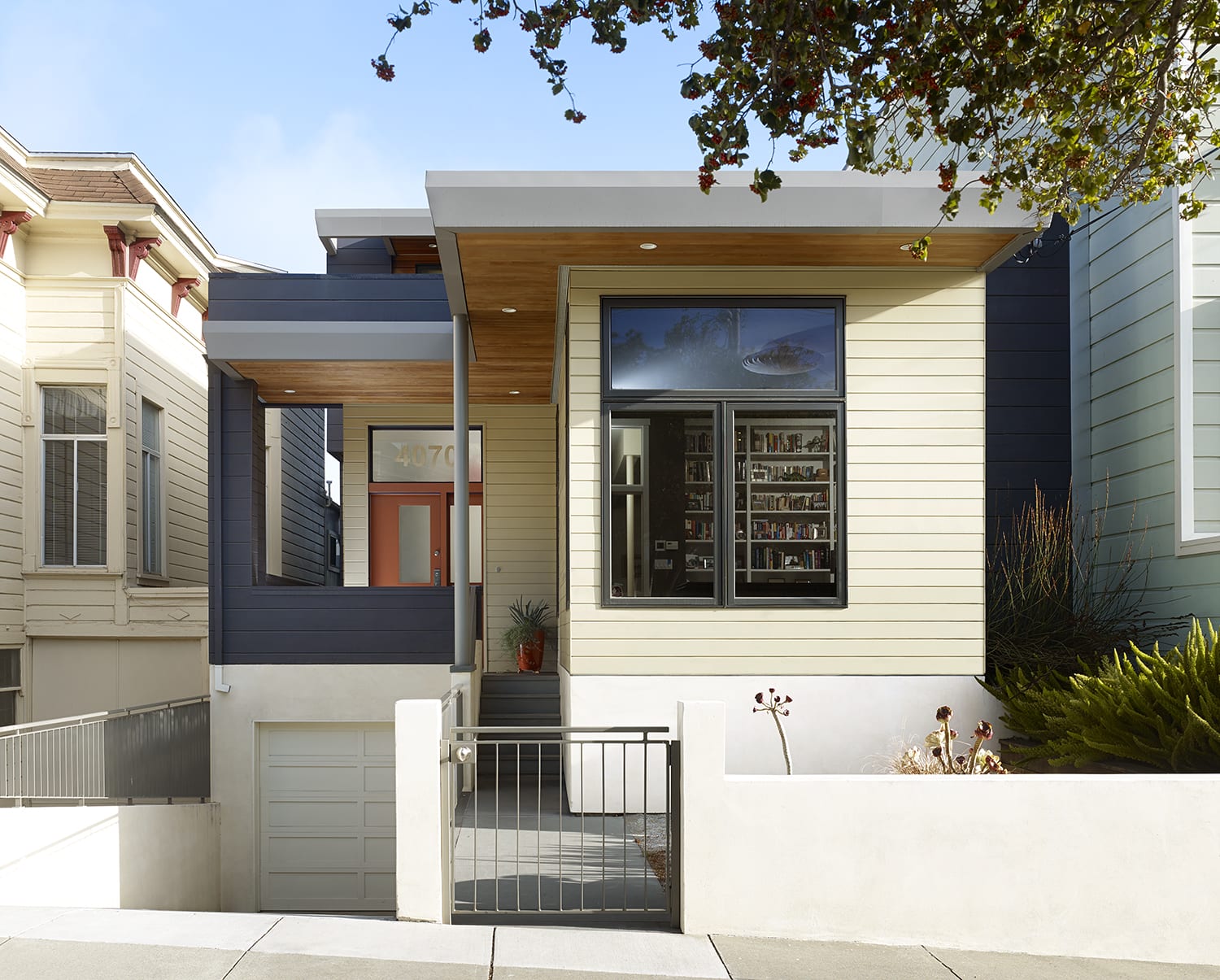
Featured image courtesy of Studio Upwall and Cesar Rubio.
Stay in the know with the latest insights
Subscribers receive news, customer stories, success and learning tips, event information, and other important announcements from Vectorworks.
By submitting this form, you agree that Vectorworks, Inc. and its authorized partners may contact you in regards to news, offers, and the use of our software, services, and platforms. Learn more about our privacy practices and your data on our privacy page.*