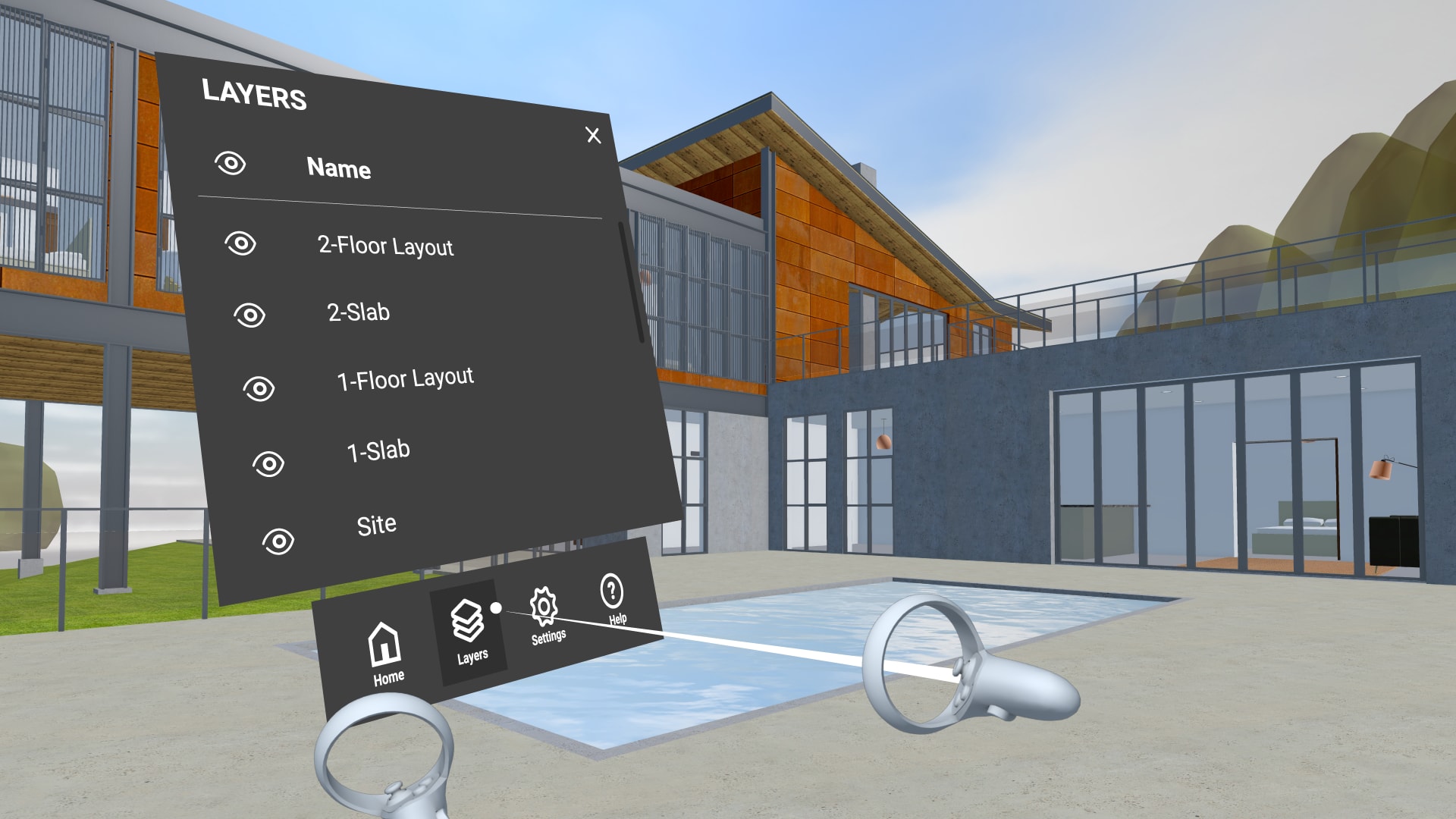
Are you looking for new ways to captivate your clients with your designs? Immersive design may be the place to start.
Immersive design uses tools like VR (virtual reality), AR (augmented reality), and interactive 3D models to move your creative visions beyond flat screens, turning ideas into walkable, explorable spaces long before anything is built.
These techniques help professionals across architecture, landscape, and entertainment design make the approval process easier, reduce risk, and deliver more memorable presentations through platforms such as Vectorworks design software, Vectorworks Nomad, Vectorworks Cloud Services, and Vectorworks Odyssey.
What is Immersive Design?
Immersive design uses VR, AR, and interactive 3D models to create digital environments that simulate real-world space, scale, and atmosphere. Unlike static drawings, immersive design enables you, clients, and other collaborators to explore and interact with unbuilt spaces in real time.
This technology shifts presentations from passive viewing to active experience. Whether evaluating a courtyard's sightlines, a lobby's circulation patterns, or a stage set's audience visibility, immersive design helps you make spatial decisions before construction or fabrication begins.
Vectorworks Odyssey, Vectorworks Nomad, and Vectorworks Cloud Services are specific tools that will allow you to deliver these explorable experiences, simply using Meta Quest headsets, smartphones, and web browsers.
Immersive Design and Experiential Design
The principles of experiential design can also be used to make your designs more immersive and engaging to your clients. For example, consider your design’s structure, lighting, and even the use of video to discover new levels of interactivity.
Multi-Industry Opportunities with Immersive Design
Although immersive design has deep roots in the architecture and landscape industries, the same principles now apply across many design disciplines. Architects can validate lobby circulation and daylighting, entertainment designers can preview stage looks from every seat in the house, and landscape designers can test views and sightlines throughout a park.
This flexibility across design disciplines is where Vectorworks design software excels, offering you the design freedom to model a theater’s rigging system in Vectorworks Spotlight, design a park’s grading plan in Vectorworks Landmark, or develop an office building’s BIM model in Vectorworks Architect — with all projects being viewable in Vectorworks Odyssey.
Win Clients Faster with Immersive Design
Conventional drawings and even 3D static renderings can feel distant, making it challenging for clients to grasp a space's true scale and mood. Today’s clients, many of whom grew up with 3D video games and interactive apps like Google Earth, are accustomed to digital environments and will naturally gravitate to your immersive designs.
Imagine your client virtually walking through a conceptual building design, museum exhibit, or garden, soaking in your creative choices, evaluating sightlines, or exploring how the overall concept makes them feel. VR brings scale, flow, materiality, and mood to life, dissolving the imagination gap that stalls decision-making.
Furthermore, using VR allows your clients to experience multiple design iterations, toggling alternatives with a single click. This speeds up approvals and encourages emotional buy-in, leading to bigger project scopes and deeper engagement.
Immersive storytelling is all about forging confident decisions and building relationships grounded in clarity and trust.

VR headsets and devices like Meta Quest allow for virtual client walkthroughs.
Empowering Designers, Contractors, and Clients
Design errors cost time and money, and they often stem from misunderstandings between designers, contractors, and clients. Immersive design technologies bring clarity to all parties: designers, contractors, and clients all see the same vision.
VR serves as a virtual pre-build, which allows you to spot proportion issues, accessibility challenges, awkward grading transitions, missed lighting opportunities, and more. Traditional top-down plans can miss these problems.
A few hours in a headset can save thousands of dollars on-site. Contractors, riggers, and other colleagues also gain from using AR and VR tech; it’s a practical solution for the entire project team, improving collaboration, streamlining feedback, and helping you all avoid risks.
Furthermore, impactful design is rooted in imagination, and immersive design strategies give life to that imagination, helping everyone involved in a project envision flexible interiors, stunning set designs, or outdoor spaces that connect people to nature.
For professionals ready to embrace these tools, your rewards are obvious: quicker approvals, more efficient builds, stronger client partnerships, and a future-ready practice.
Differentiate Your Business with Immersive Design
In any design industry, there’s competitive pressure that’s constantly increasing. The firms that stand out today lean into immersive design, setting themselves apart for a future where clients expect interactive, explorable presentations.
When you offer VR walkthroughs or AR site previews, you're presenting a design, but you’re also reducing client risk. Savvy clients will understand that immersive validation means fewer costly change orders and more confident decision-making.
Practical Tips for Starting with Immersive Design
You don’t need a room full of high‑end headsets to begin with immersive design; you already have the core hardware in your pockets. With a smartphone and Vectorworks design software, publish 3D models to Vectorworks Cloud Services and use the Nomad app to explore designs in AR on site or in the office.
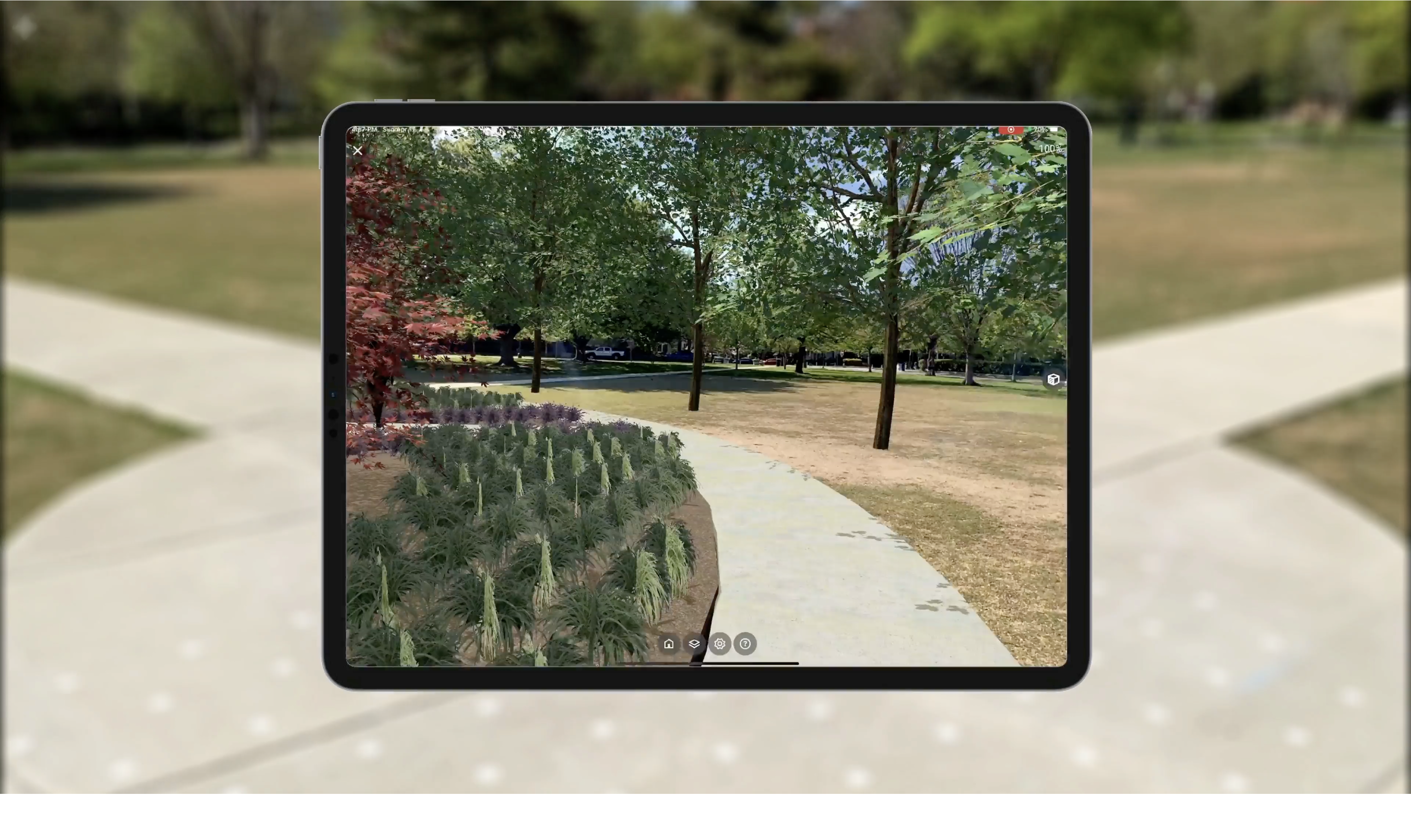
On-site use of AR using Vectorworks and an iPad.
A simple starting path might look like this:
- Create 360° panoramas from your Vectorworks 3D models so clients can spin around a space in their browser or on a tablet.
- Use an affordable VR headset, such as Meta Quest, with tools like Vectorworks Odyssey to host immersive walkthroughs that feel like in‑person tours of unbuilt spaces.
- Leverage Vectorworks Cloud Services and Nomad to share interactive 3D and AR views remotely, avoiding bulky setups while still giving clients a sense of presence.
- Integrate immersive elements, like short walkthrough videos, panoramic views, and AR previews, into proposals and presentations, expanding your toolkit over time.
3D project viewed via Vectorworks’ Nomad app on iPhone, iPad, and online.
3D project viewed via Vectorworks Odyssey with Meta Quest 3 headset.
Immersive Design in Action
Still on the fence about adopting immersive storytelling for your own practice? If so, the Royal Conservatoire of Scotland’s production of "Sweet Charity" will show you how much of a difference the technology can make.
Vectorworks Odyssey became a critical communication and validation tool during the design and technical planning process of the iconic production. The large-scale musical, staged in the Athenaeum Theatre, featured complex scenic automation, flown elements, and a non-standard lighting rig, all of which were modeled in Vectorworks by the student production team.
Exporting the full 3D model into Vectorworks Odyssey and viewing it in immersive VR allowed the team to step inside the design at true scale — walking the stage, flying the rig, and even sitting in audience seats — to better understand how scenic, lighting, and masking elements interacted throughout the space. This proved especially valuable for evaluating sightlines, audience visibility, and the movement of large sliding set pieces that could expose backstage areas if not properly masked.
Vectorworks Odyssey also streamlined collaboration across departments and with external creatives. Rather than relying solely on drawings or rendered views, the head of stage and technical team used VR walkthroughs, screenshots, and recorded flythroughs to clearly communicate design intent to the director, designers, and production staff, many of whom were less comfortable interpreting CAD plans.
The ability to quickly teleport to specific seats or backstage positions allowed the team to identify and resolve potential issues well before fit-up, including masking adjustments and rigging conflicts that may otherwise have surfaced too late. While not a replacement for traditional plans or high-end renders, Vectorworks Odyssey played a key role in interrogating the design, aligning teams around a shared spatial understanding, and reducing risk in a highly complex production.

IMMERSIVE DESIGN IN ACTION
Watch how the Royal Conservatoire of Scotland’s production of "Sweet Charity" came to life.
Stay in the know with the latest insights
Subscribers receive news, customer stories, success and learning tips, event information, and other important announcements from Vectorworks.
By submitting this form, you agree that Vectorworks, Inc. and its authorized partners may contact you in regards to news, offers, and the use of our software, services, and platforms. Learn more about our privacy practices and your data on our privacy page.*