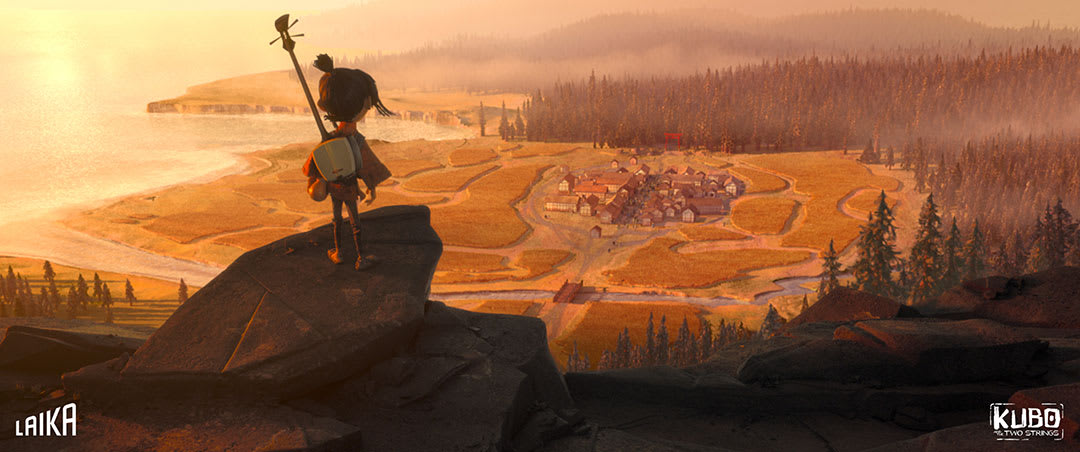
“Box Trolls,” “Kubo and the Two Strings,” and now 2026’s “Wildwood” — LAIKA Studios has created some of the most charming, innovative films in recent years with the use of Vectorworks Design Suite.
Oscar® nominations are impressive, but what’s truly inspiring is how the Portland-based studio goes about making its films. “At LAIKA, we’re driven to tell bold, original stories that stand the test of time — and to share them with audiences everywhere. As a leader in filmmaking, we blend cutting-edge technology with timeless artistry to create the classics of tomorrow,” says the studio on its website.
How Does LAIKA Create Sets for Its Films?
Two of the designers who help bring LAIKA’s unique visions to life are Carl Hamilton and Dan Meeker, both of whom proudly come from a theatre background. Both also suggest storytelling is what got them into the craft. And such a passion for narrative clearly seeps into their work.
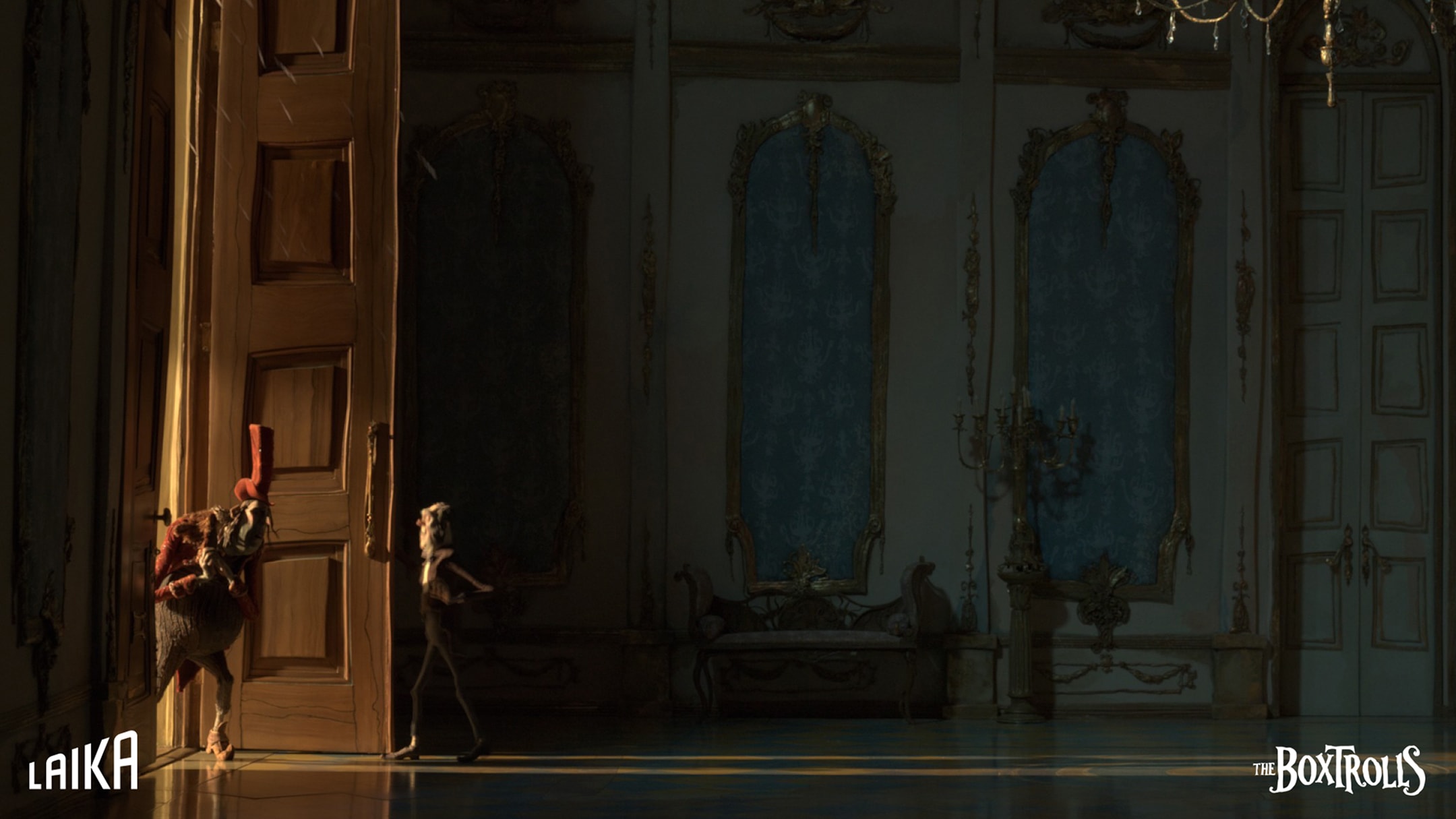
Everything you see on screen is a finished world and finished environment, but what you don't see is that a set of a living room may actually be 17 little sets stuck together.Dan Meeker
The studio’s work is unlike any other movie studio currently. The worlds, characters, and stories of each film are uniquely their own, but they also share an enigmatic charm, likely due to the care and talent of LAIKA’s craftspeople.
“We set designers are sort of in the minority here. We actually have to generate working drawings,” Meeker said cheekily. “And we’re not just hitting ‘print’ on a CNC machine or 3D printer and walking away having a finished set. Everything we make is touched by 50 to 100 craftspeople who need to be able to look at a working drawing and a presentation model.”
The consideration of these craftspeople, as well as the functional needs of stop-motion animation, are some of the most unique challenges of LAIKA’s set design.
For every set LAIKA's team creates, they need to consider the safety of builders, animators, and puppet designers. Additionally, they need to plan and design how each set will break apart and be put back together.
Essentially, each LAIKA set piece is a giant puzzle that can be broken apart and put back together. Creating this space between the broken-up set allows animators to get close enough to adjust the puppets. According to Hamilton and Meeker, LAIKA’s animators want to be no more than 18 inches away from a puppet. Therefore, they have to account for the need for such proximity when constructing their puzzle-like set pieces.
“Everything you see on screen is a finished world and finished environment,” said Meeker. “But what you don't see is that a set of a living room may actually be 17 little sets stuck together.”
A Changing Design Process with Vectorworks Design Suite
Even during the COVID-19 pandemic, Hamilton and Meeker were able to continue designing sets from home using Vectorworks. “We were able to go completely digital,” said Hamilton. A fully digital workflow differed from the part-practical, part-digital method that Hamilton and Meeker were using before.
This approach lets Meeker dive into Vectorworks animation features and lighting tools. “We couldn’t be in the same room as one another. So, to really show the model, we had to improve our presentation,” he said.
“That’s why I’ve always used Vectorworks as a professional. With its all-in-one nature, I can make everything happen without exporting or switching,” Meeker said, adding that that’s what he loves about Vectorworks: that it allows him to go from concept to shop drawings in one software.
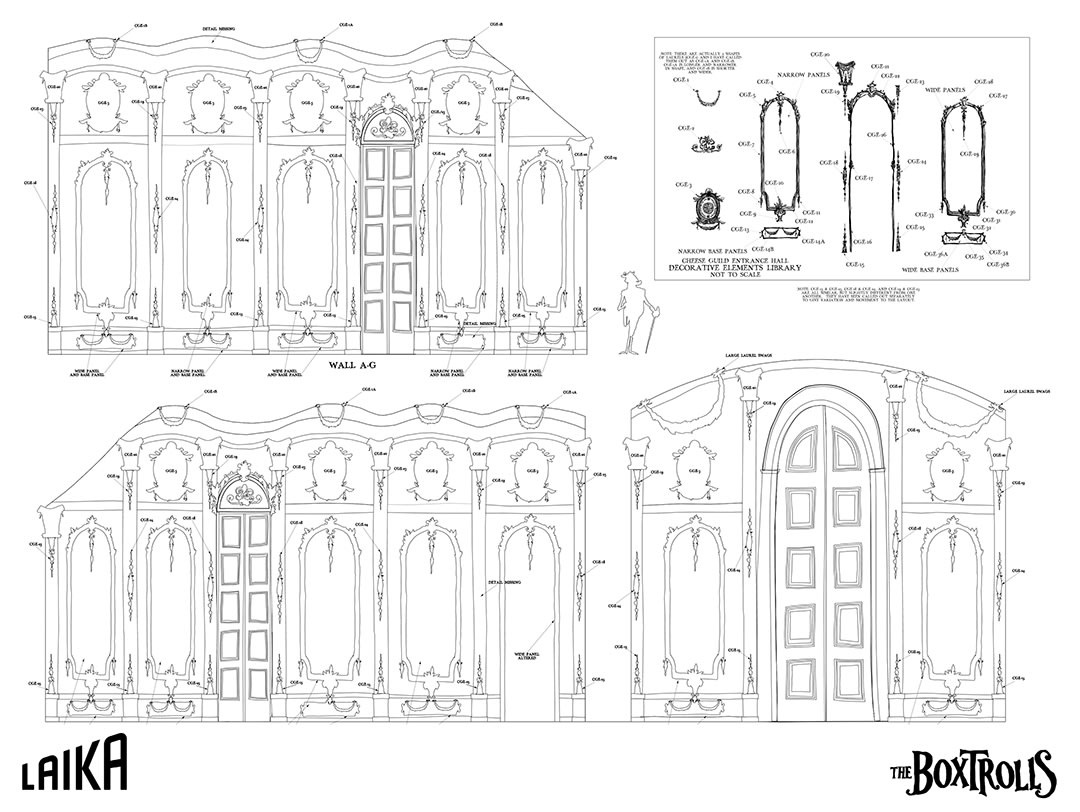
That’s why I’ve always used Vectorworks as a professional. With its all-in-one nature, I can make everything happen without exporting or switching.Dan Meeker
Going completely digital wasn’t the only change the pandemic had on the set design team’s workflow. For the newest film, set designers were brought in earlier than ever before. So early, in fact, that concept artists were also beginning their first drafts.
“We’d take a first stab at a set, and the concept artists would take a stab at a different set,” Meeker recalled. Then, the two departments would swap. Set designers would draw over concept art in Vectorworks, and the concept artists would add to the set designers’ models.
The dialogue between the two teams led to a better understanding. “Now, when we sit down to formally design a set, it may be simply a revision process,” said Meeker, “because we've kind of already designed it, as we were involved early enough in the conceptual phase.” From there, the set only needs minor tweaks and adjustments to push LAIKA’s collective vision forward.
With set design, concept art, puppet design, and even the script all progressing together, the LAIKA team relies upon narrative as a guiding light.
Hamilton and Meeker referenced the novel for their newest project, Wildwood. “I went through it many, many times,” Meeker remembered.
Championing Vectorworks and the Software’s Capabilities
“I want younger designers to know Vectorworks!” exclaimed Meeker.
Meeker has used Vectorworks since its early days, and it’s clear that Meeker believes the software is the best in the business to help tell stories, and he wants to work with others who may feel the same.
He mentions that you don’t have to be a great designer to get started in Vectorworks, but by learning the tools and working with great designers, you’re bound to become one yourself.
Images courtesy of LAIKA Studios.
Stay in the know with the latest insights
Subscribers receive news, customer stories, success and learning tips, event information, and other important announcements from Vectorworks.
By submitting this form, you agree that Vectorworks, Inc. and its authorized partners may contact you in regards to news, offers, and the use of our software, services, and platforms. Learn more about our privacy practices and your data on our privacy page.*