Bosco Shaw spends most of his working week inside Vectorworks Spotlight. That’s been true for more than 15 years now, but his relationship with design software goes back much further.
He started out as a civil engineering draftsperson, spent decades working in AutoCAD, and eventually switched to Vectorworks after seeing how well it supported theatrical thinking. Today, as a director at Additive in Melbourne, Vectorworks is the backbone of how his team designs, documents, and delivers complex lighting projects.
ABOUT ADDITIVE
Additive was founded in 2013 by two theatrical lighting designers: Shaw and his business partner, Paul Lim, both with deep roots in contemporary dance, drama, circus, and live events.
The company now works across theatre, events, museum lighting, and public art, with a small core team and a flexible network of associate designers and technicians that expands and contracts depending on the project. Shaw and Lim work on concept and design phases together, then split roles for delivery. Shaw focuses on the artistic and documentation side of the work, while Lim oversees technical delivery and budgets.
You can explore Additive’s impressive portfolio here.
THE PROJECT: OUR WONDROUS PLANET
That mix of creative and technical thinking was central to Our Wondrous Planet, a permanent exhibition at Melbourne Museum.
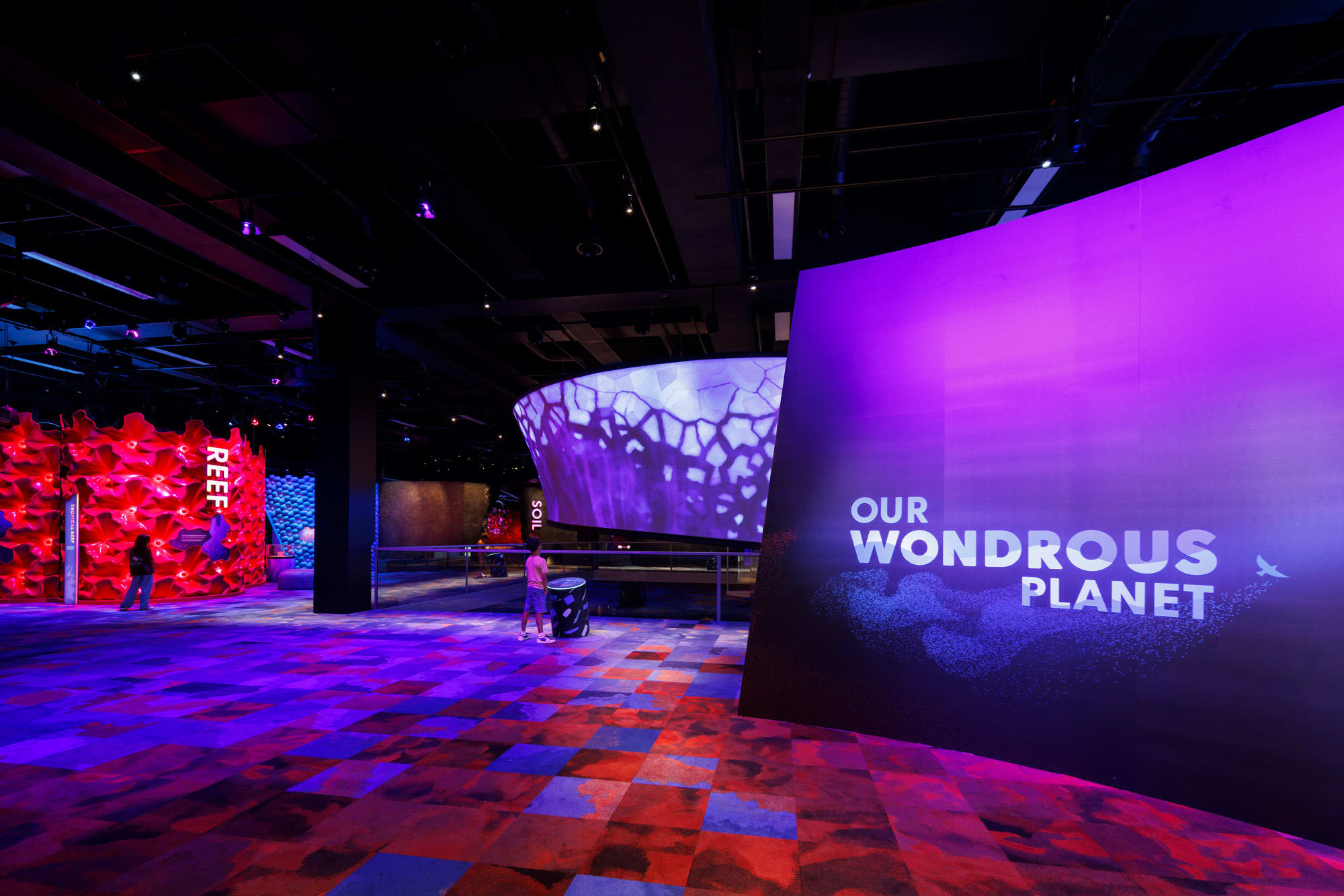
Spanning 1,800 square meters, the gallery is an immersive exploration of global biodiversity, organized into four biomes: reef, soil, rainforest, and ice.
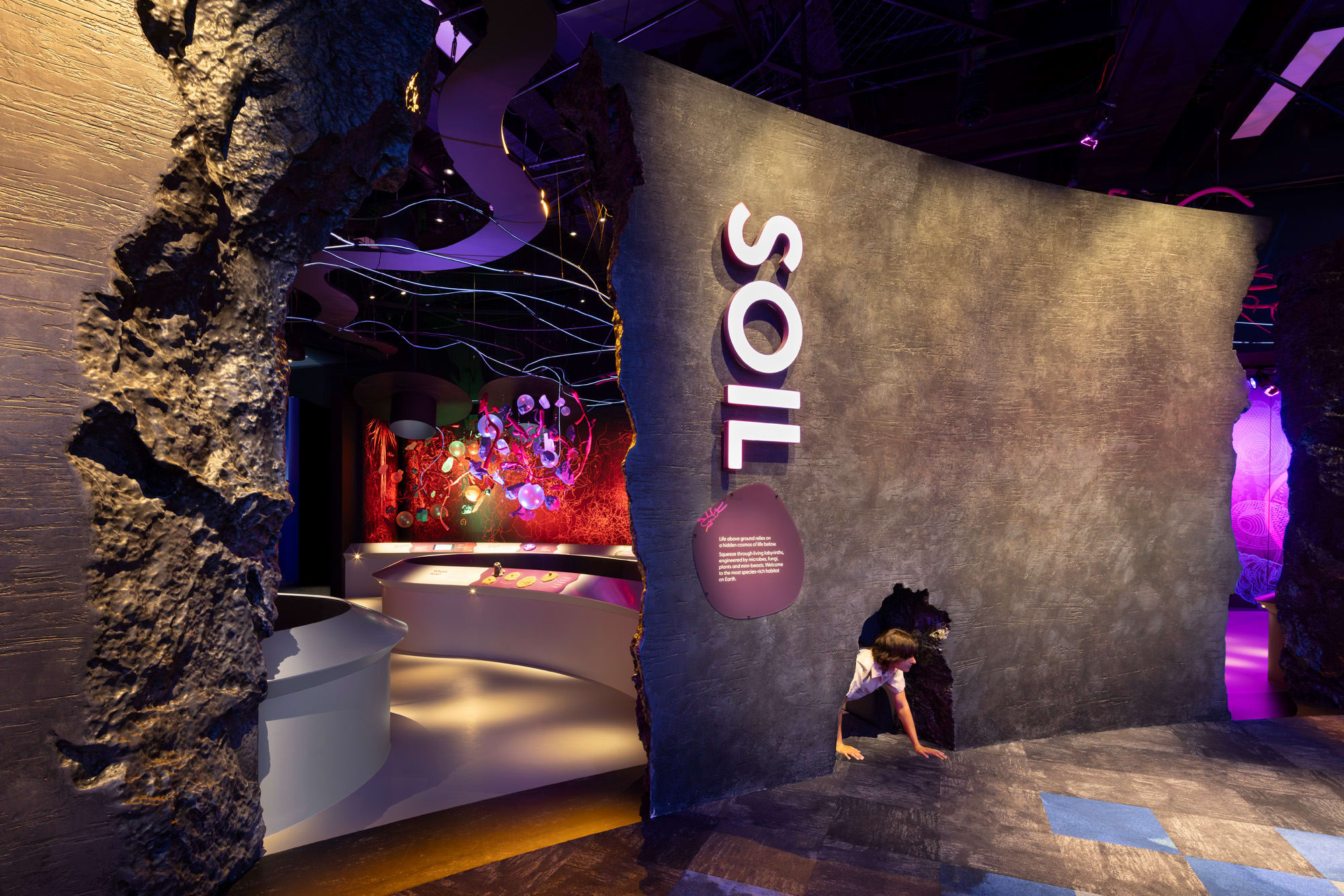
Image credit: Museums Victoria.
Visitors move through large-scale projections, interactive media, tactile installations, and more than 800 animal specimens. Rather than rows of glass cases, the museum wanted an experience that felt expansive, atmospheric, and emotionally engaging.
The museum brought Additive onto the project specifically for that theatrical sensibility. Shaw’s team was responsible for the complete lighting design, concept development, detailed documentation, and installation oversight. The challenge was to create lighting that felt dynamic and expressive while still meeting strict conservation requirements. Lux levels had to be tightly controlled, fixtures needed to be maintainable in the long term, and every decision had to account for a 10- to 15-year lifespan.
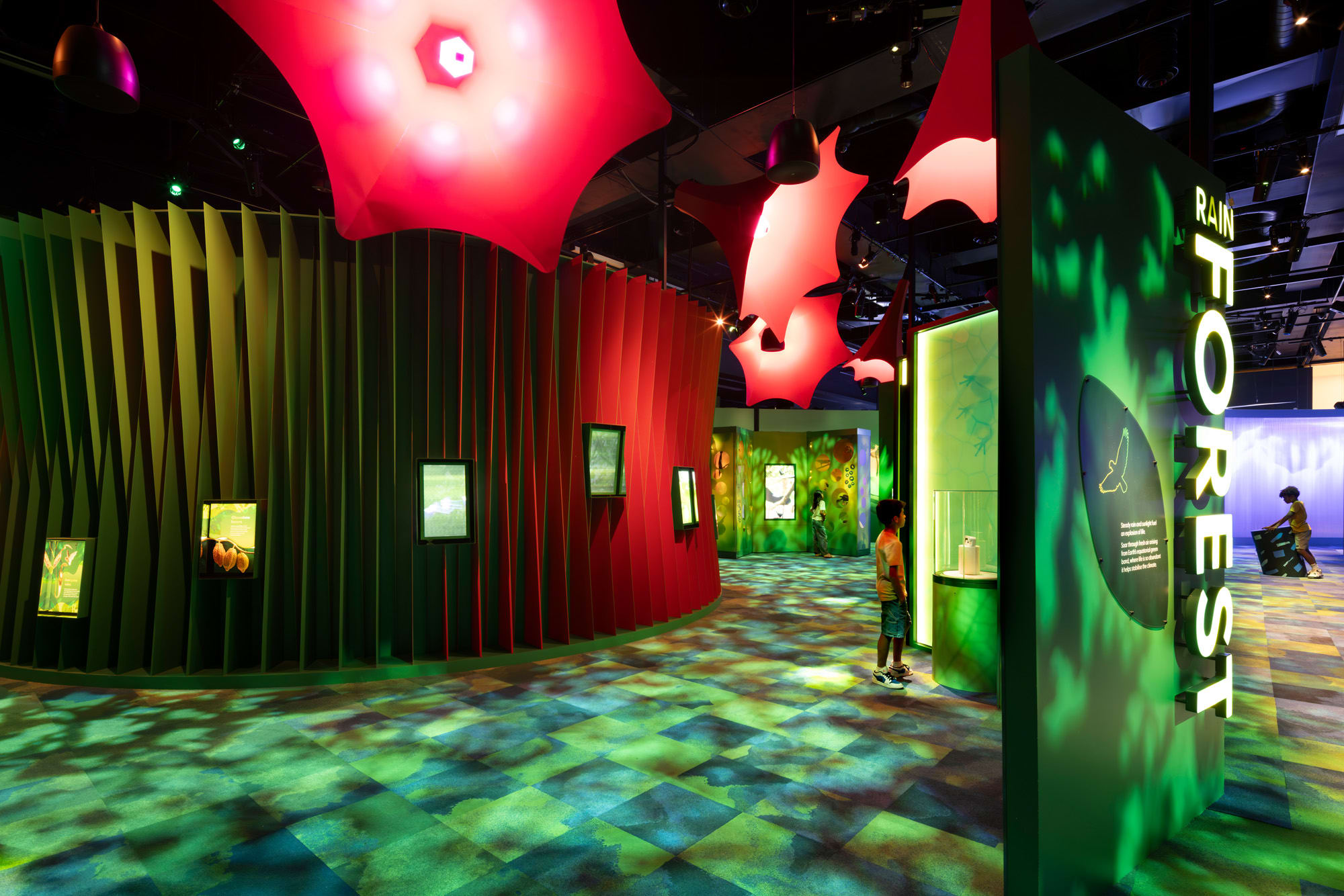
Image credit: Museums Victoria.
Early Collaboration Saves Time and Money
Early collaboration was key. The museum’s in-house spatial design team works primarily in Rhino, and much of the exhibition design was issued as detailed 3D models rather than traditional drawing sets. Additive converted Rhino models into Vectorworks, preserving geometry and textures. The museum shared internal documentation, conservation guidelines, and evolving models, allowing Shaw’s team to give feedback early and often.
One early concern was glass reflection in large showcase displays. For a life-size elephant named Bong Su, the museum provided a full 3D scan of the specimen. Shaw used Vectorworks alongside Twinmotion to produce detailed renders and storyboards showing how reflections would behave inside the showcase.
Those visuals made the issue immediately clear: “Our renders actually triggered them to upscale the spec on the glass to low-reflective glass,” Shaw said. Without this early concept work, the exhibit may well have faced unseemly lighting issues that betrayed the vision for the space.
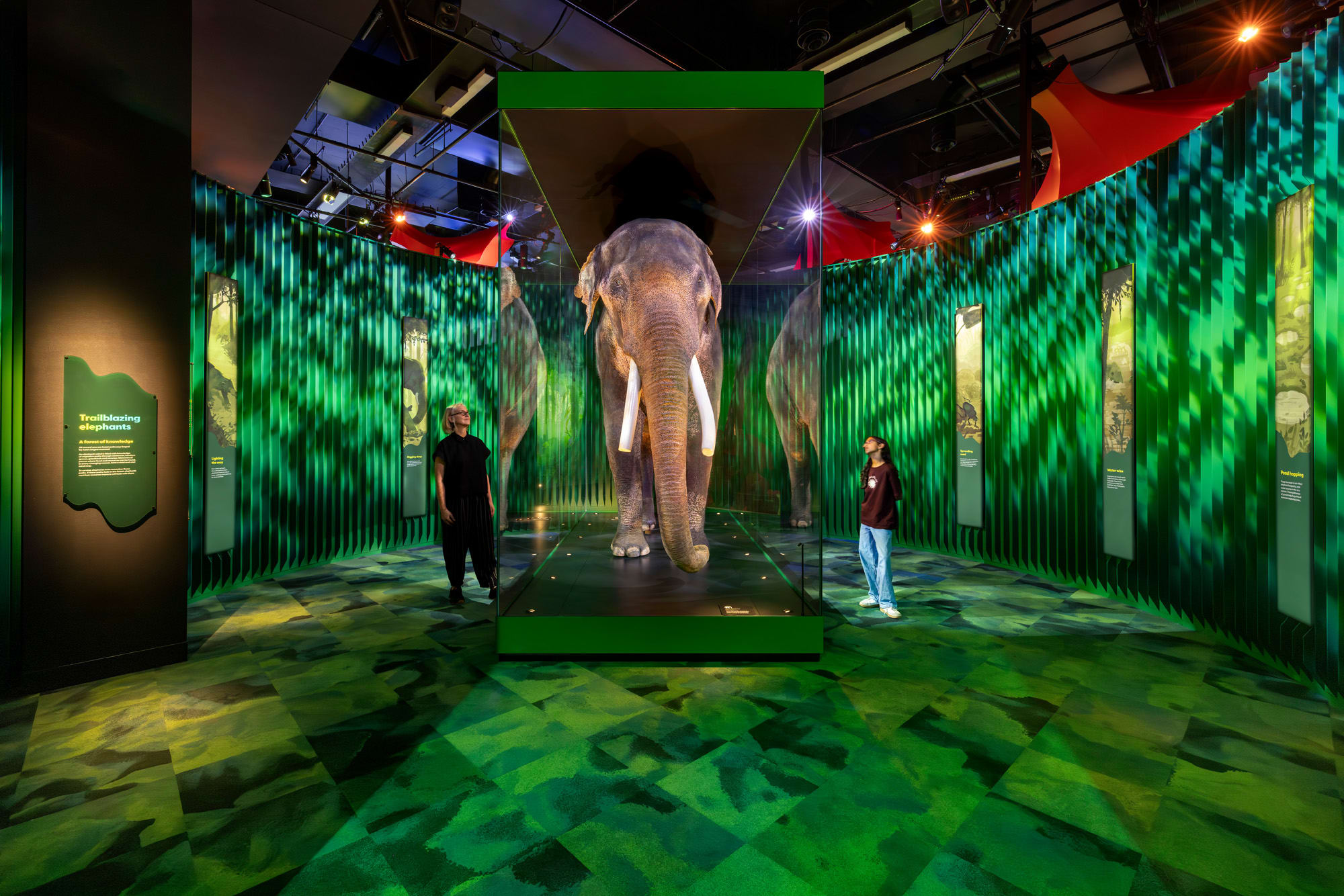
Image credit: Museums Victoria.
In the ice biome, Additive faced a different challenge. The museum wanted a smooth, immersive color gradient across the space, but a painted finish would have been expensive and difficult to maintain. Instead, Shaw’s team proposed using gobos to create the effect with light. The solution delivered the visual impact the museum wanted, while remaining flexible, serviceable, and aligned with long-term maintenance goals.
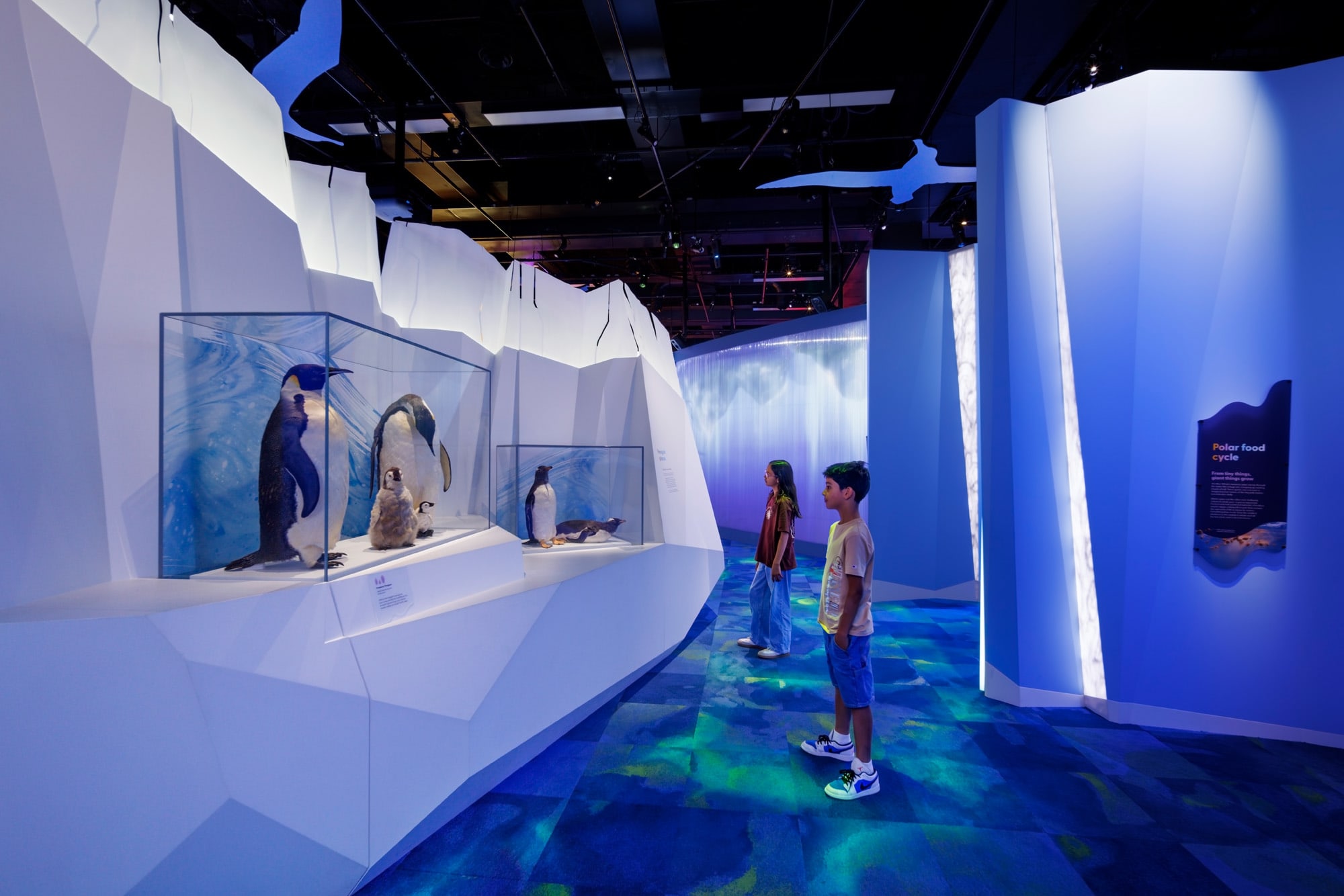
Image credit: Museums Victoria.
240 Meters of Brilliance
The soil biome’s suspended mycelium network was one of the most complex elements in the exhibition. Inspired by fungal root systems and underground communication networks, the installation evolved from early sketches into a fully abstracted lighting feature made from LED pixel tape.
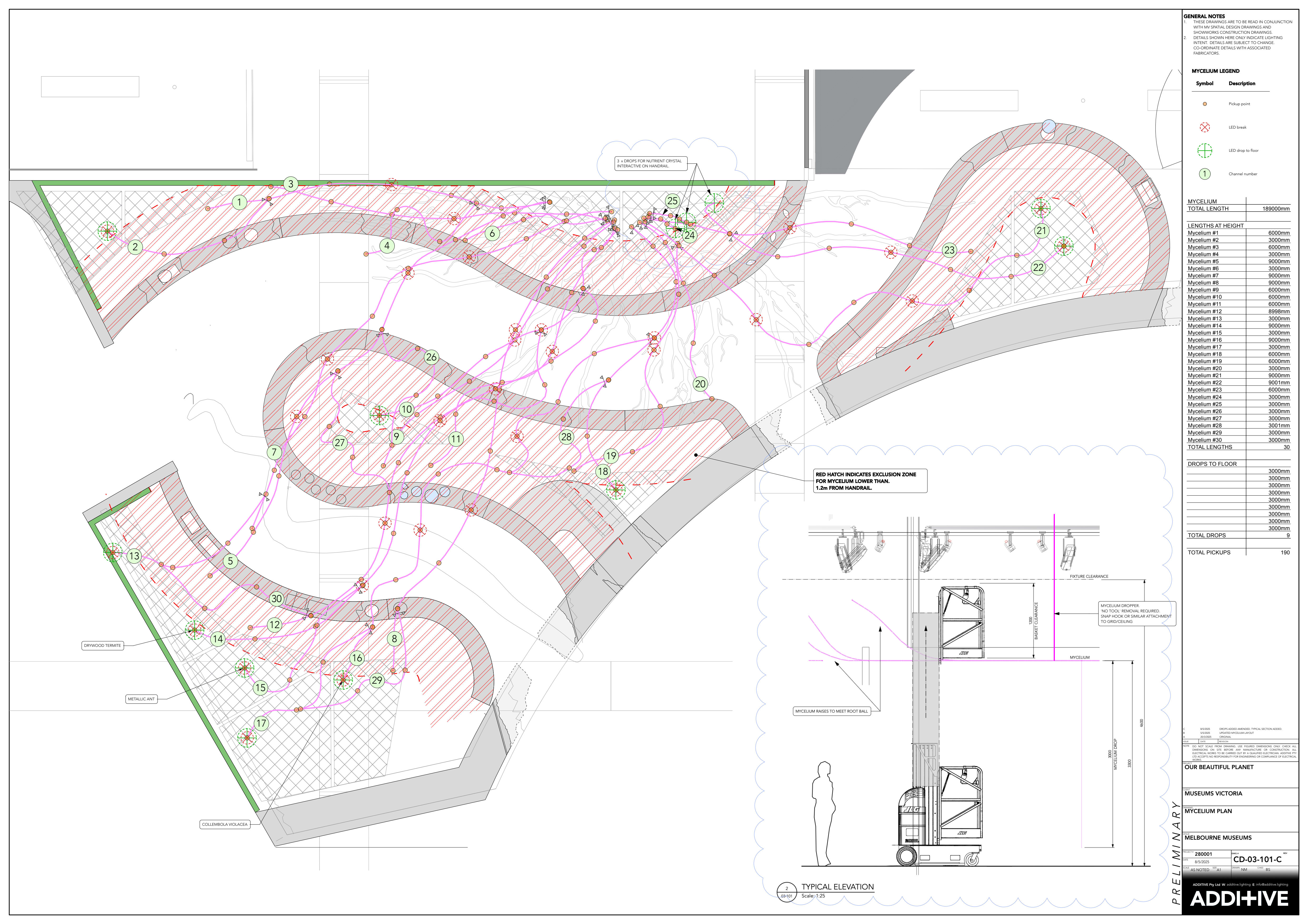
Image credit: Additive.
Shaw’s team worked through 2D concepts, 3D models, and renders to resolve cable paths, dropper locations, access for maintenance, and the way light and shadow would interact in the space. “We had to model this completely in 3D so that we could understand where all the cable runs were going,” Shaw said.
The final installation uses around 240 meters of COB pixel tape and fills the ceiling with slowly shifting patterns of light.
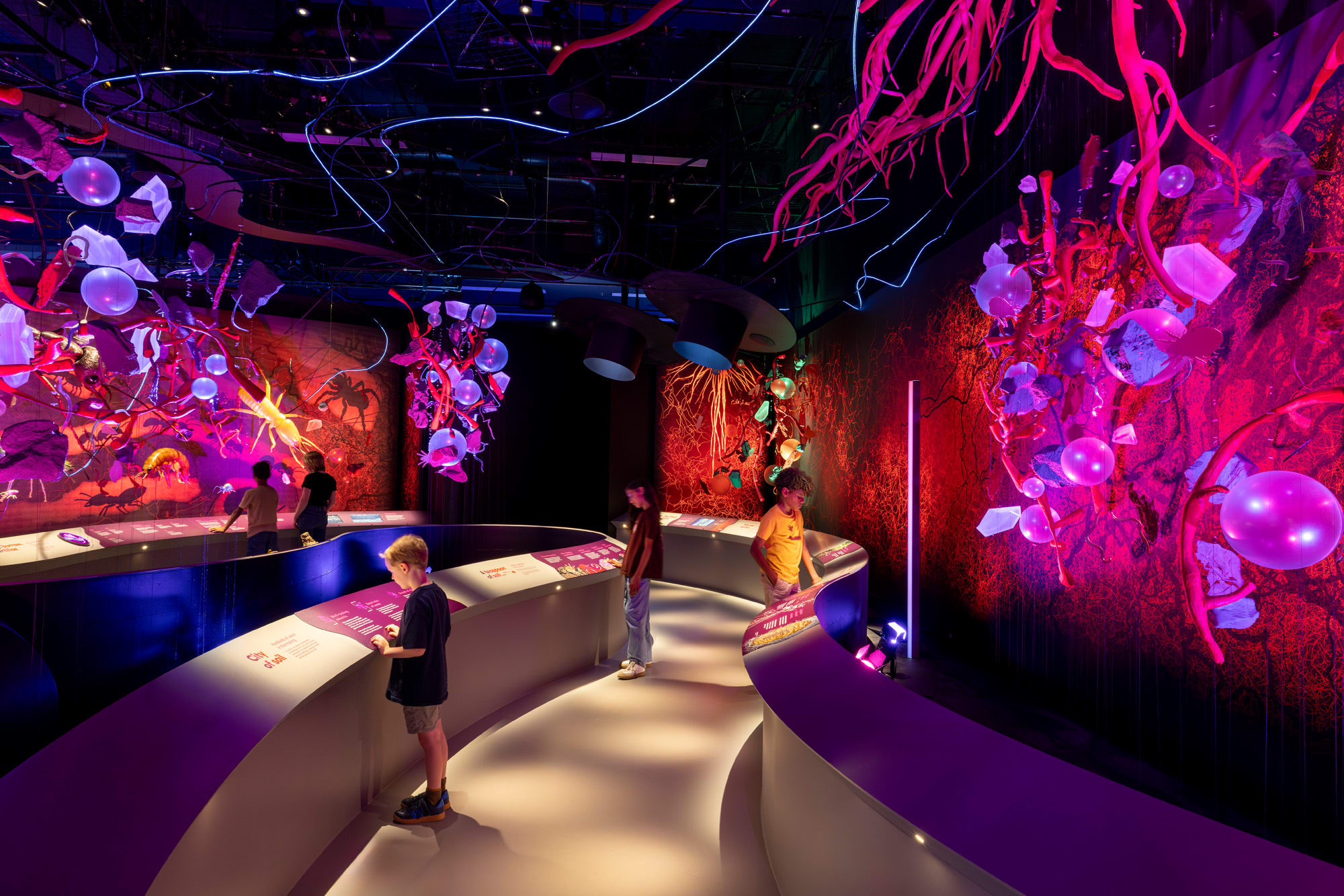
Image credit: Museums Victoria.
Permanent Installations Add Complexity
Permanent installations demand a very different mindset from theatre or events, which tend to be temporary installations on a tight turnaround. There’s no room to cut corners or rely on short-term fixes. Fixture choice, control systems, access, ventilation, and maintenance all must be resolved up front.
For Shaw, that meant leaning heavily on Vectorworks as both a design tool and a communication platform, not just within Additive, but across the wider project team. “A permanent exhibition forces you to do everything properly. Everything has to be accounted for,” he said.
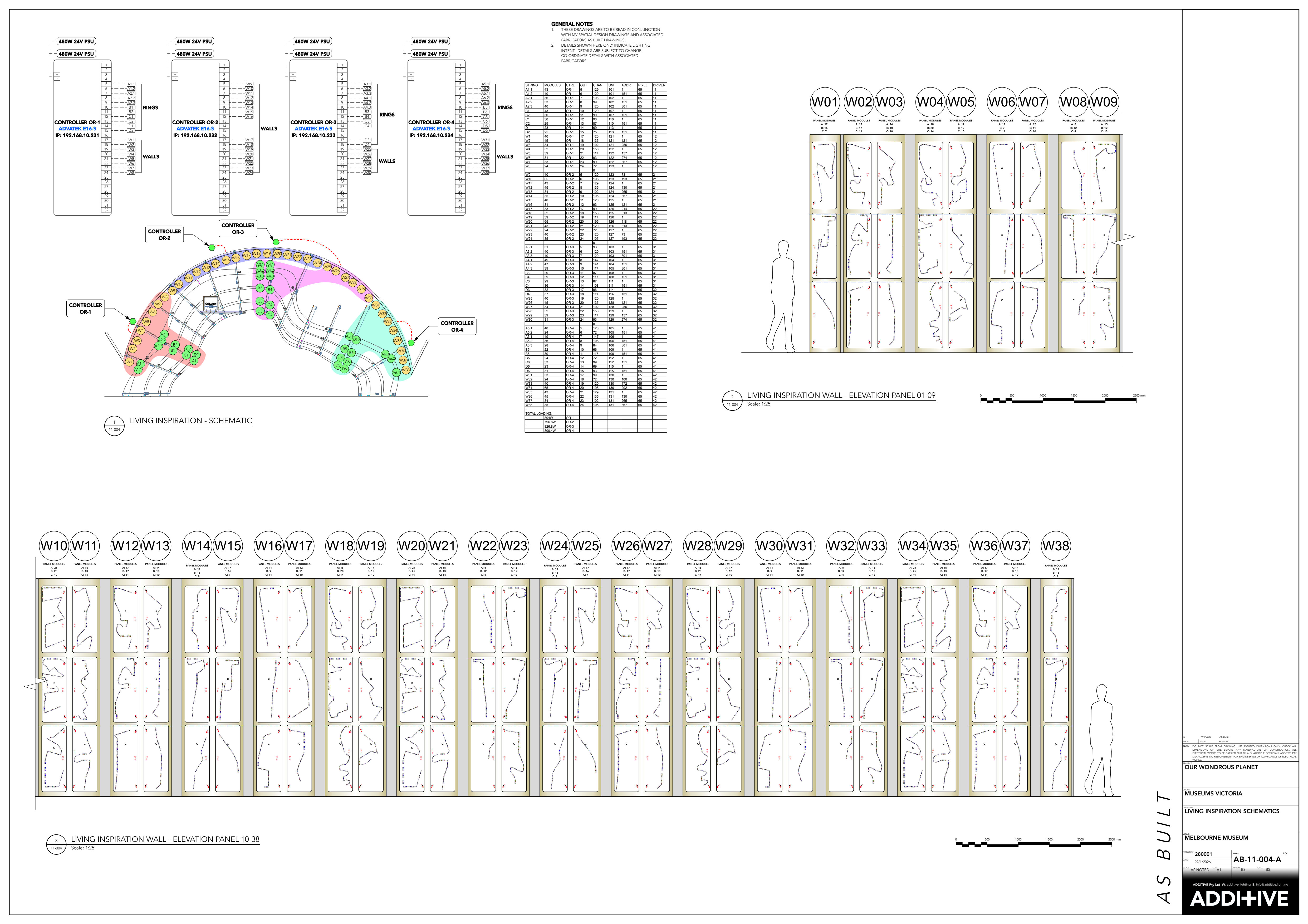
Image credit: Additive.
VECTORWORKS SPOTLIGHT AS A DESIGN HUB
Shaw used Vectorworks Spotlight from early planning through construction and commissioning, building detailed 2D and 3D drawings, schedules, and reports that tracked hundreds of fixtures across the four biomes. In total, the exhibition included roughly 530 gallery fixtures, 380 showcase fixtures, around 240 meters of LED pixel tape, and a wide range of integrated backlit elements. While there were only 11 core fixture types, those expanded into around 70 variants once mounting methods, optics, accessories, and use cases were considered.
Documentation That Intuitively Evolves with the Project
As the project moved into design development, the Vectorworks file structure evolved. Initially, the gallery was split into multiple project files so different biomes could be developed in parallel. Shared reference files held symbols, viewport styles, and resources, allowing changes to propagate across drawings. Later, during construction, everything was consolidated into a single project file for coordination purposes.
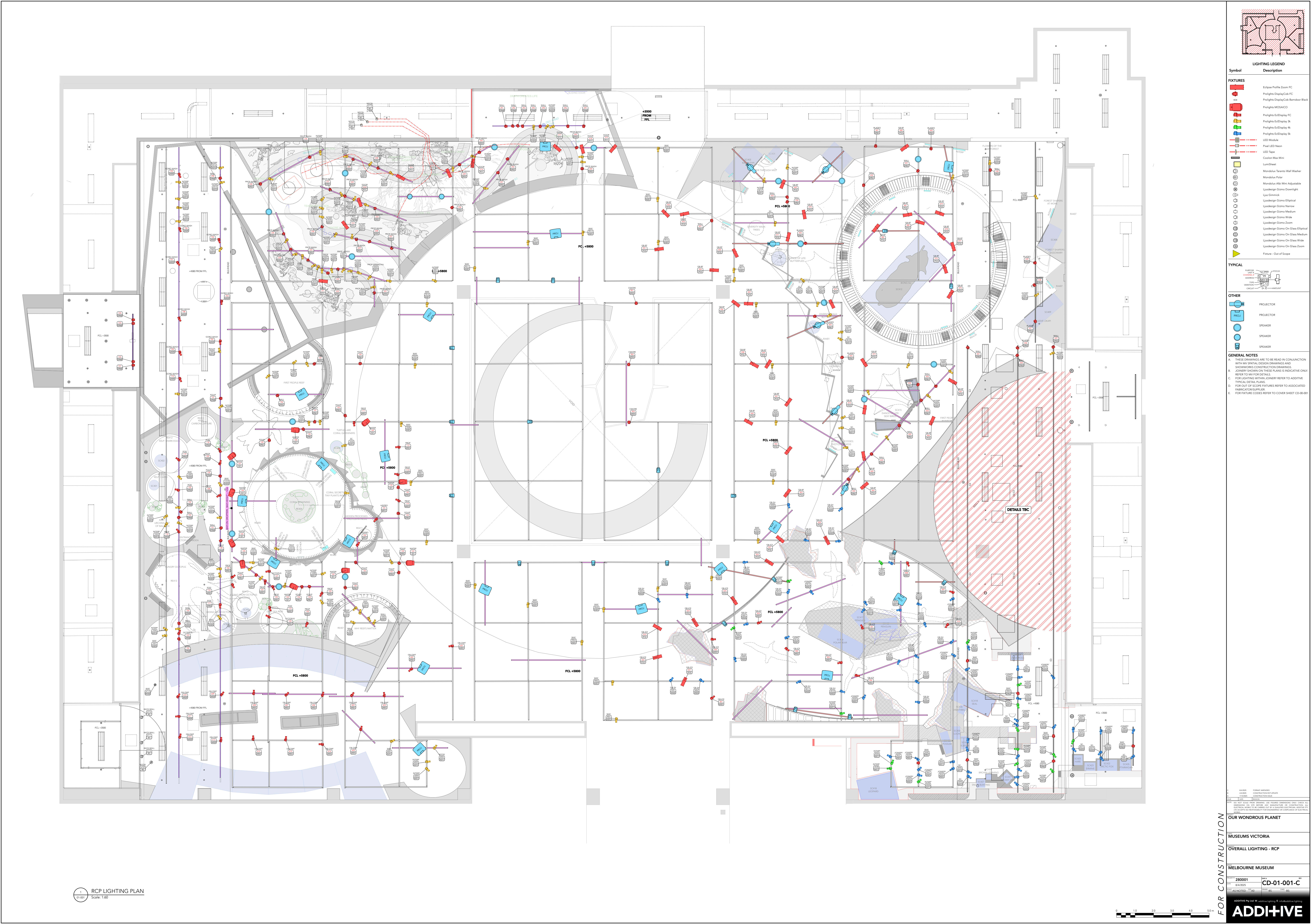
Image credit: Additive.
Documentation became increasingly detailed as installation approached. Custom records were attached to lighting devices to track accessories, safety cables, and mounting requirements without cluttering the drawings. Data tags replaced traditional label legends in many areas, allowing information such as fixture type, focus point, use, and height to be placed exactly where installers needed it. Focus points played a major role, guiding design intent as well as on-site aiming and verification.
Custom Fabrication Means More to Account For
Throughout the gallery, Additive had to integrate lighting into joinery and custom-built elements. That meant multiple rounds of drawings and close communication with fabricators to resolve access, ventilation, and maintenance concerns. Vectorworks acted as the shared language between designers, technicians, and contractors by helping everyone understand where fixtures went in addition to how they would be serviced years down the line.
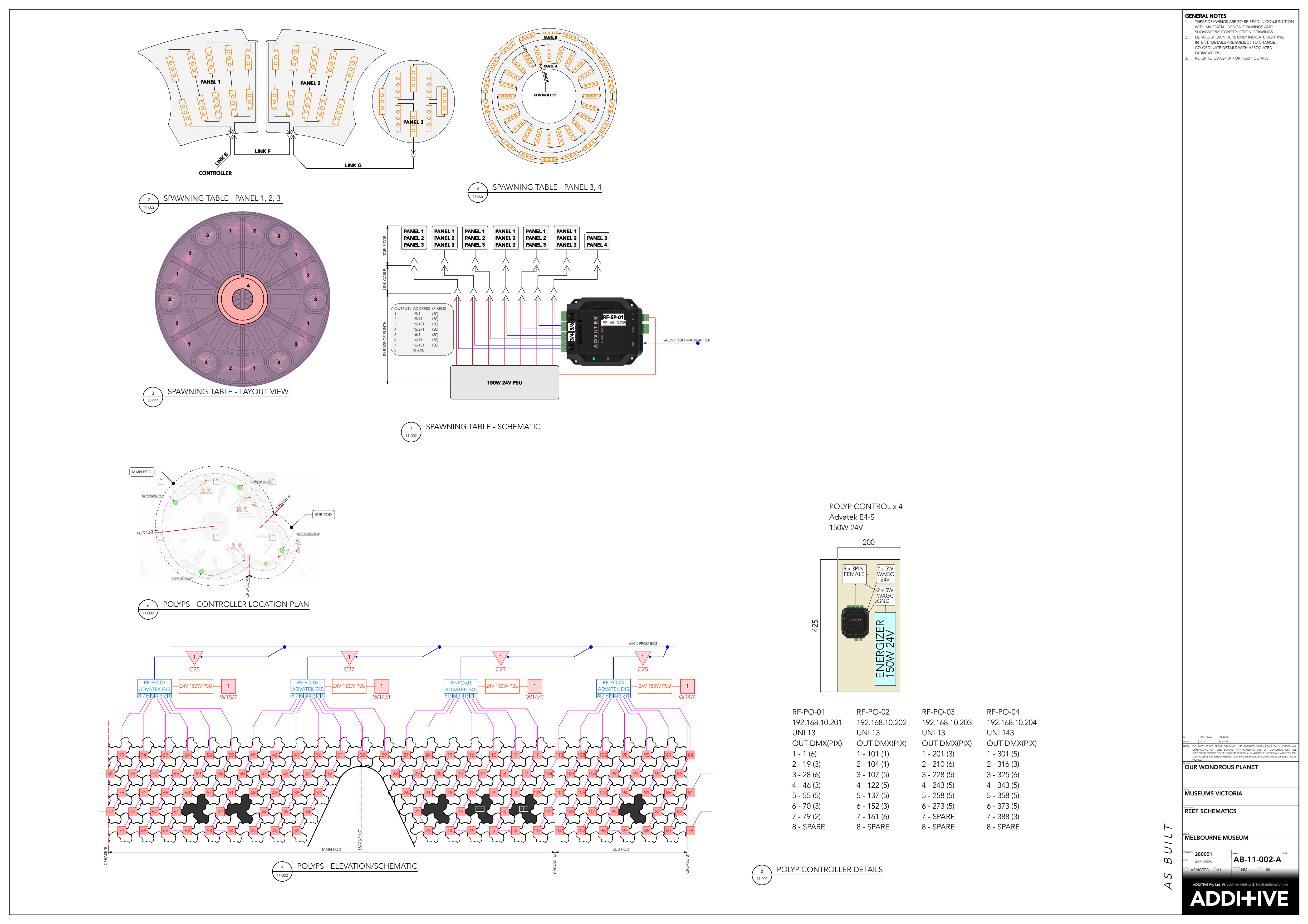
Image credit: Additive.
Visualization Sells Ideas
For visualization, Shaw paired Vectorworks with Twinmotion for fast, client-facing renders and walkthroughs, while using Vectorworks’ built-in Renderworks when he needed to closely check lighting behavior. That combination allowed the team to move quickly without sacrificing confidence in the technical outcome.
Time Saved Is Money Earned
Shaw credits much of the project’s success to the time saved by working in Vectorworks. Compared to previous AutoCAD-based workflows, he estimates the software saved 15 to 20 hours per week for two to three team members during the design phase alone. Automated data, consistent viewport styles, and well-organized project files also paid dividends during installation, allowing crews to adapt quickly when conditions changed on site.
By the time Our Wondrous Planet opened, Vectorworks had become more than a design tool. With key museum staff moving on to new endeavors following completion, the detailed as-built documentation produced by Additive is now essential for preserving knowledge and supporting long-term maintenance.
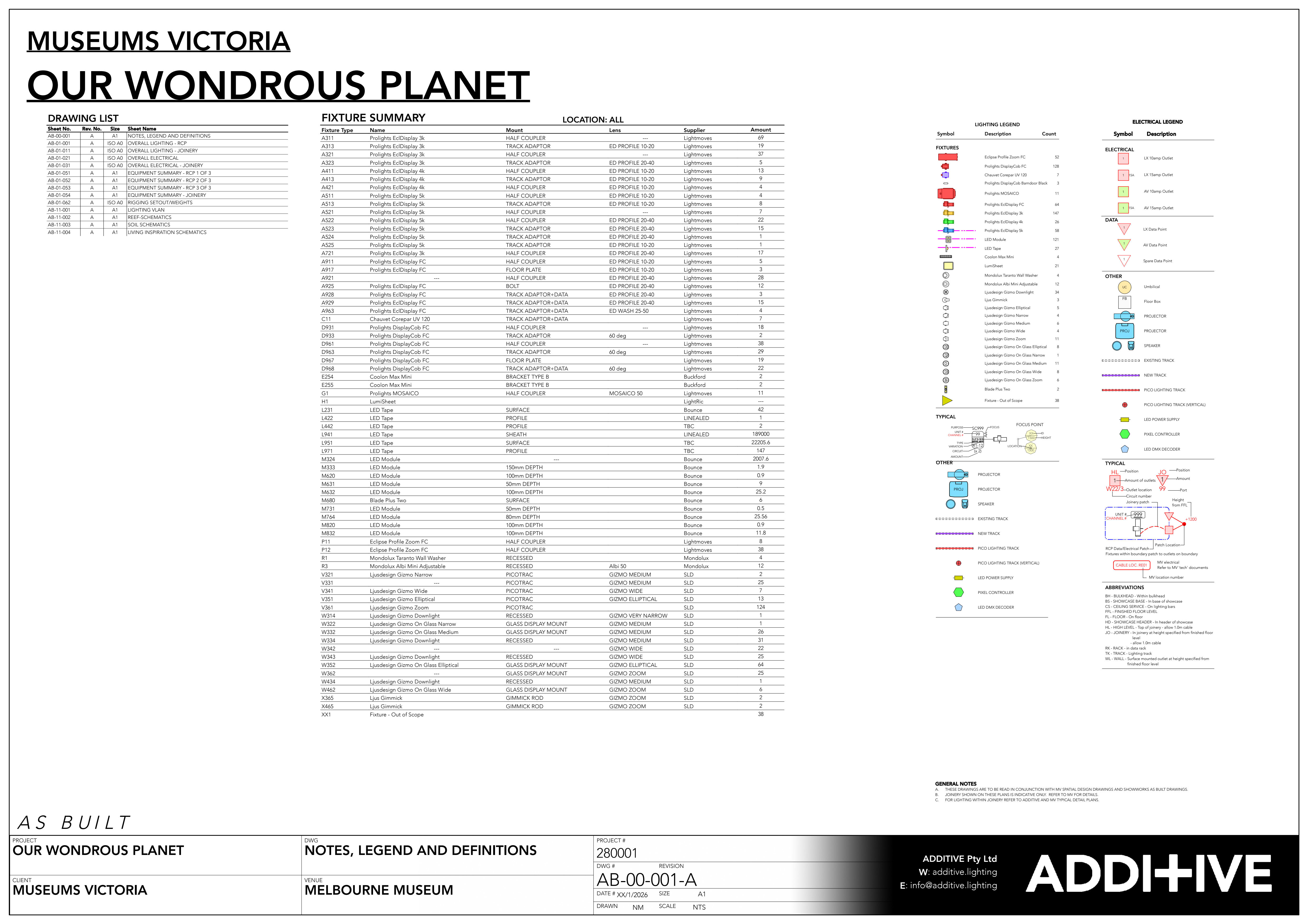
Image credit: Additive.
A NEW ERA FOR ADDITIVE
For Shaw, the project represents both a milestone and a shift in his own and his firm’s direction. It pushed Additive further into permanent installations and museums, and it reinforced the value of bringing theatrical thinking into new contexts.
“Don’t be afraid to apply what you know,” he said. “If it works in theatre, it can work elsewhere. You just have to be willing to push it, document it properly, and see it through.”
Stay in the know with the latest insights
Subscribers receive news, customer stories, success and learning tips, event information, and other important announcements from Vectorworks.
By submitting this form, you agree that Vectorworks, Inc. and its authorized partners may contact you in regards to news, offers, and the use of our software, services, and platforms. Learn more about our privacy practices and your data on our privacy page.*